
Lower your internet bill
61% of people overpay for their internet.
Are you one of them?
Unlock exclusive offers in your area!
Call now
[tel]Enter zip code















 Use code: KALA & receive a $50 gift card with your order!
 Are you happy with your Internet service?

About the author
The federal government handed out a whopping $42.45 billion last year in an effort to finally bring fiber optic cable and faster broadband to rural America. As of June 2026, the BEAD fiber money has been put to use, with construction underway.
The rural expansion program is called BEAD, which stands for Broadband Equity, Access, and Deployment. In the middle of 2026, it’s the most important broadband news happening in your state. All 56 states and territories have submitted their funding plans. Fifty-four have won federal approval. State broadband offices are signing contracts with internet service providers, and construction on real BEAD-funded projects started this summer.
If you’ve heard about BEAD from a news article, a town hall meeting, or a neighbor’s flyer, you probably have one question: Is fiber coming to my home, and if so, when? This guide is written for you.
Lower your internet bill
61% of people overpay for their internet.
Are you one of them?
Unlock exclusive offers in your area!
Call now
[tel]Enter zip code
BEAD is the largest single federal investment in broadband infrastructure in U.S. history. The money came from the Infrastructure Investment and Jobs Act passed in 2021, and it flows from the National Telecommunications and Information Administration (NTIA) to each state’s broadband office, which then selects private internet companies to build the infrastructure. Every state runs its own program, picks its own ISPs, and manages its own construction timeline. That’s why the answer to “when will BEAD reach my house" depends entirely on which state you’re in and which provider won the subgrant for your specific area.

The technology question
The type of technology coming to your address depends on your state and location within it. In June 2025, the Trump administration removed the fiber-first requirement from BEAD and replaced it with what they called a “technology-neutral" approach. This means satellite, fixed wireless, and other technologies now compete alongside fiber for BEAD funding.
So, BEAD might bring fiber optic cable to your house. Or it might bring fixed wireless. Or in some cases, satellite.
West Virginia is 94 percent fiber. North Dakota is 93 percent fiber. Vermont is 87 percent fiber. Mississippi and Louisiana are both above 80 percent fiber. These states are betting on fiber as the long-term solution, which makes sense: fiber is fast, reliable, and lasts for decades once it’s in the ground. But it’s also expensive to build, which is why other states are using fixed wireless to connect rural areas faster. Texas is at 51 percent fiber and filling other gaps with state funding. Nevada, with its mountainous terrain, has embraced a mixed approach: 51 percent fiber, 41 percent fixed wireless, and 9 percent satellite.
The technology you get depends entirely on which ISP won the subgrant for your neighborhood. Before you get excited about fiber, check what your state’s planning to deploy in your area.
These steps are ordered by reliability, starting with the fastest way to know whether your state’s money is actually moving.
Go to the NTIA BEAD Progress Dashboard. This dashboard shows which states have received NTIA approval, which have gotten NIST approval (the step that unlocks the actual money), and which have signed their award agreements. As of June 2026, 52 states and territories have signed and returned their award agreements. If your state is one of them, the contracts with ISPs are being signed right now.
Search “[your state] BEAD subgrantee awards" or “[your state] BEAD final proposal." Most states have published the names of the ISPs that won BEAD subgrants and the general areas they plan to serve. This is where you’ll find the most current information, since state broadband offices update it as contracts finalize. Some states have built interactive maps showing planned coverage areas. Check whether your state built one. If it did, search for your address or ZIP code. If it didn’t, write down the names of the ISPs that received subgrants in your region, because you’ll need them in Step 4.
Go to https://broadbandmap.fcc.gov and enter your address. The FCC map shows whether the FCC classifies your location as “unserved" (speeds below 25 Mbps download and 3 Mbps upload), “underserved" (below 100 Mbps download and 20 Mbps upload), or “served" (meeting or exceeding those thresholds). BEAD funding prioritizes unserved locations first, underserved locations second. If the FCC map says your address is already served, it might not be eligible for BEAD funding at all, even if you know the service where you live is terrible. If you believe the FCC classification is wrong, BEAD has a challenge process you can use to correct it. That process varies by state, so check your state broadband office’s website for details.
Once you know which company won the subgrant for your region (from Step 2), call 1-855-577-0305. Ask specifically whether your address is in the internet providers’ BEAD build area and what the estimated construction timeline is. ISPs often have notification sign-up forms for addresses they plan to serve. Get on the list. Some companies will text or email you as construction approaches your street.
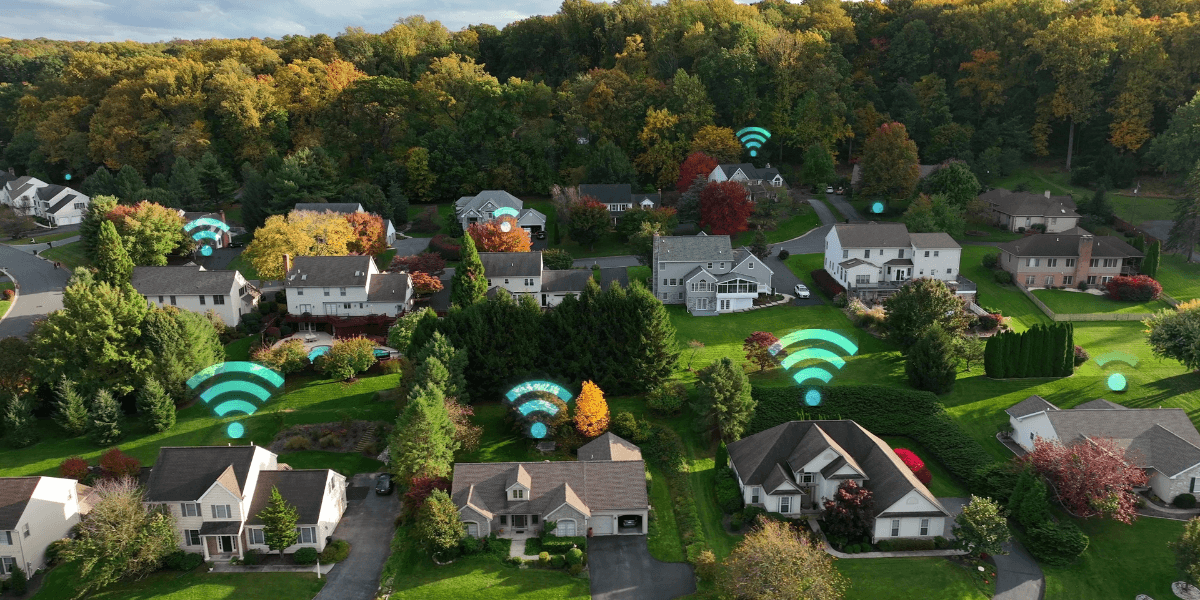
Let’s talk about the timeline, because the question isn’t just “is BEAD coming," it’s “when." Here’s the honest answer: construction is happening now in 2026, but most rural communities won’t see fiber or fixed wireless reaching their streets until 2027 or 2028. The full BEAD build-out runs from 2026 through 2030, so if your area is later in the funding queue, you might be waiting until 2029 or early 2030.
That’s not meant to be discouraging. It means BEAD is real and the timeline is real. Shovels are in the ground. But waiting two to four years on bad internet is a long time when you’re trying to run a business, help kids with homework, or access telehealth. That’s why the next section matters.
Three realistic options that can change your internet experience starting this month, not in 2027.
Starlink is the most immediate upgrade available to almost any rural address with a clear view of the sky. Monthly plans run from $[shortcode] to $[shortcode], depending on the speed tier you choose. The standard equipment kit costs $349 upfront. You self-install it, which typically takes less than an hour. Speeds in most rural areas land between 50 and 200 Mbps, which is a massive jump from DSL or no service at all. There are no data caps. Starlink is month-to-month with no contract, so when BEAD fiber arrives at your address, you can cancel Starlink without penalty.
Something to note: Starlink uses a technology called CGNAT for some customers, which can interfere with online gaming if you’re using certain multiplayer games. For most people doing remote work, streaming, or browsing, this won’t matter. But if you have a gamer in the house, ask about CGNAT compatibility when you check Starlink’s availability at your address.
If your address gets 5G coverage from T-Mobile or Verizon, this is worth checking before you commit to anything else. T-Mobile’s 5G Home Internet costs $[shortcode] to $[shortcode] per month depending on the plan. Verizon’s 5G Home runs $[shortcode to $shortcode per month. Neither requires a contract, and both are self-install. Speeds of 100 to 300 Mbps are possible in well-covered areas. The catch: 5G coverage in rural areas is still patchy and expanding.
Many rural areas have local or regional fixed wireless providers that send a signal from towers to receivers on your home. Speeds vary widely, from 25 Mbps to 300 Mbps depending on the provider and your distance from the tower. Pricing is inconsistent, but many local ISPs offer better customer service than national carriers. Importantly, some of these local fixed wireless companies are BEAD subgrantees themselves, meaning they’ll eventually upgrade you to fiber under the BEAD program.
Use the five steps above to find out whether BEAD funding is coming to your specific address and which ISP will be building it. Then use the zip code lookup tool below to see every internet provider available at your home today. Check whether Starlink, 5G Home Internet, or a local fixed wireless provider can bridge the gap until BEAD-funded fiber or fixed wireless arrives.
The goal is to make an informed decision. If BEAD construction is two years away and you’re currently on satellite that’s slower than dial-up, Starlink or 5G Home makes sense right now. If it’s four years away, upgrading is almost definitely worth it. But bookmark your state broadband office’s award tracker so you know the moment fiber arrives on your street. When that construction does arrive, your situation changes permanently.
Lower your internet bill
61% of people overpay for their internet.
Are you one of them?
Unlock exclusive offers in your area!
Call now
[tel]Enter zip code
Not everywhere, but in most places, yes. BEAD’s primary goal is to connect unserved and underserved rural locations. If you’re currently using old-school satellite (which has 600+ milliseconds latency and data caps), BEAD will likely bring fiber, fixed wireless, or even the newer low-earth orbit satellites like Starlink to your address. That said, some very remote areas might still rely on satellite as part of the BEAD deployment mix. Check your state’s final proposal to see what technology is planned for your specific location.
The FCC broadband map can be inaccurate. If you believe your address is classified incorrectly, most states have a formal challenge process where you can submit evidence (like speed test results from your actual connection) to dispute the classification. The challenge window is typically open for a few months each year. Check your state broadband office’s website for the current challenge period and instructions. If you successfully challenge your classification, your address becomes eligible for BEAD funding.
No. BEAD money goes to internet service providers and broadband cooperatives to build infrastructure, not to individual households as subsidies. However, some states have set aside BEAD funding for affordability programs, meaning future BEAD-funded broadband might be offered at reduced rates to low-income households. Check your state broadband office’s final proposal to see whether your state included affordability provisions.
[1] ntia.gov. “BEAD Progress Dashboard."
[2] broadbandusa.ntia.gov. “Public Resources related to BEAD Plans and Milestones."
[3] comptroller.texas.gov. “Broadband Equity, Access, and Deployment (BEAD) Program."
[4] psc.wi.gov. “BEAD Process."
[6] broadbandbreakfast.com. “Louisiana Clears First Batch of NEPA Approvals for BEAD."
[8] rcrwireless.com. “Five states making real progress on BEAD."
[9] mosaic51.com. “Everything you need to know about the BEAD Program."
[10] broadbandmap.fcc.gov. “FCC National Broadband Map."
[12] budgetseniors.com. “Starlink Cost Per Month: Every Plan & Fee."
[13] usmobile.com. “Starlink Plans & Pricing In 2026: Monthly Costs, Hardware & Every Tier Explained."
Do you want to leave a review for AT&T Internet?
About the author

Infinity Sales Group, LLC