
Lower your internet bill
61% of people overpay for their internet.
Are you one of them?
Unlock exclusive offers in your area!
Call now
[tel]Enter zip code
 Use code: KALA & receive a $50 gift card with your order!
 Are you happy with your Internet service?

About the author
Fiber internet availability varies dramatically from one block to the next, even within the same city.
Fiber-optic internet transmits data as pulses of light through glass cables, delivering speeds and reliability that older copper-based technologies simply can’t match. Unlike cable or DSL (which was originally built for telephone and TV service), fiber networks must be constructed from scratch, street by street and neighborhood by neighborhood. Think of it like a new highway system. Major metro corridors get built first because the economics make sense, while smaller roads and rural routes follow later, or wait for government funding.
As of early 2026, fiber passes roughly 60% of U.S. households, according to joint research from the Fiber Broadband Association (FBA) and RVA Market Research [1]. That’s up from 40% in 2023, which is a pretty remarkable pace of expansion, but it also means about 40% of American addresses still don’t have access.
Here’s a guide for finding out whether or not fiber is available in your area.
61% of people overpay for their internet.
Are you one of them?
Unlock exclusive offers in your area!
Call now
[tel]Enter zip code
There are a few different ways to see if fiber is available to you:
The quickest way to find fiber internet near you is to use a broadband comparison tool. Enter your zip code or full address to instantly see which internet providers are available, along with plan speeds and internet prices.
The FCC’s Broadband Map [2] lets you check fiber internet availability by address using data submitted by providers through the FCC’s Broadband Data Collection (BDC). It’s the most comprehensive government-backed fiber internet availability map, though it can occasionally lag behind real-world deployments by a few months.
If you know which fiber providers serve your region, you can check fiber availability by zip code directly on their websites. Most major ISPs have a “check availability" tool on their homepage that returns results by address.
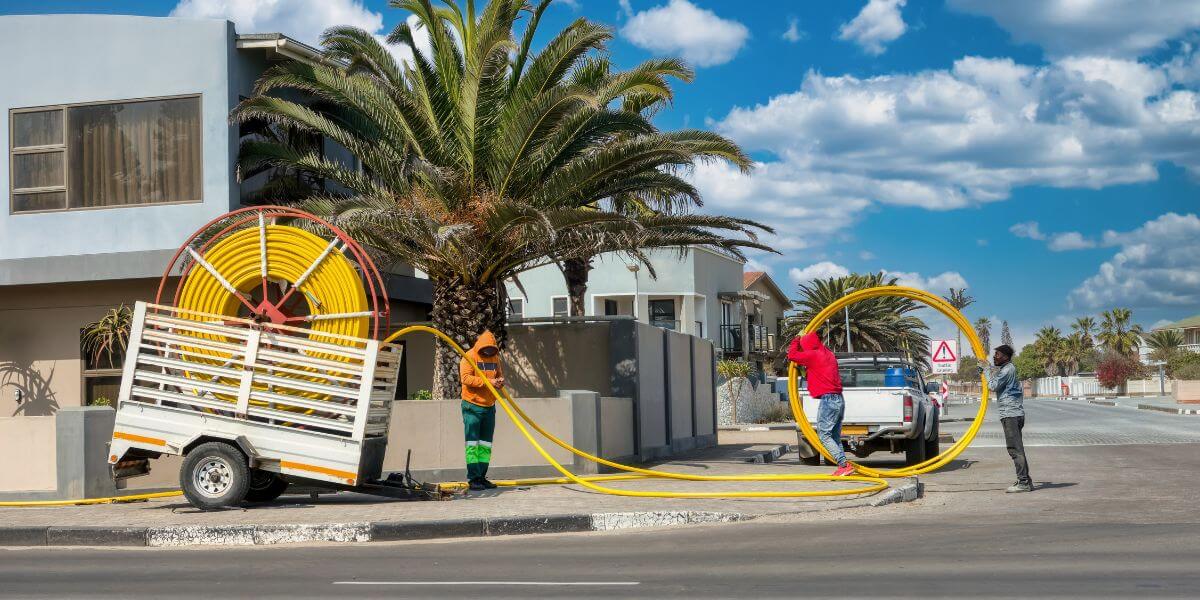
Where Is Fiber Internet Available? Major Providers by Region
Not all fiber internet providers operate nationwide. Here’s a breakdown of the biggest names and where they tend to serve:
If fiber isn’t available at your address yet, the situation is always changing.
The biggest driver of new rural and suburban fiber access is the Broadband Equity, Access, and Deployment (BEAD) Program [3], a $42.45 billion federal initiative managed by the NTIA. BEAD prioritizes fiber construction for all eligible unserved and underserved locations where it’s technically feasible. As of early 2026, 18 states have begun awarding construction contracts, with the first BEAD-funded connections expected online in late 2026 and buildout continuing through the end of the decade.
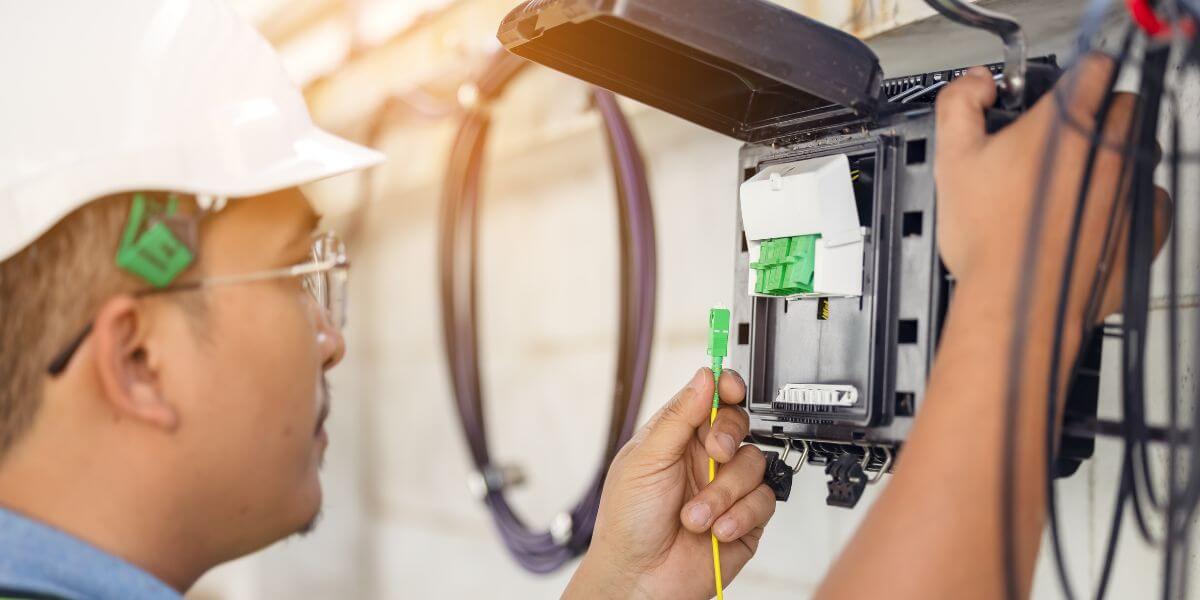
What If Fiber Isn’t Available Yet?
If you’ve checked fiber internet availability by address and come up empty, these are the strongest alternatives while you wait:
Hybrid Fiber Coaxial (HFC) internet remains the most widely available high-speed option, reaching roughly 88% of U.S. addresses [4]. Cable can deliver download speeds of 500 Mbps to 1 Gbps, which is more than enough for most households, though upload speeds are significantly slower than fiber.
5G Fixed Wireless Access (FWA) has become the fastest-growing broadband alternative, serving an estimated 12 million U.S. households as of early 2026 [5]. T-Mobile Home Internet and Verizon Home Internet lead this segment, typically delivering 100–300 Mbps. Performance can vary based on tower proximity and network congestion.
Satellite (Starlink) is worth considering for rural locations where cable and 5G FWA aren’t viable. Starlink averages 85–220 Mbps, though it’s the priciest option and latency is higher than wired connections. When you compare internet plans across these technologies, our tool lets you see internet prices, speeds, and terms side by side.

Fiber vs. Cable vs. Fixed Wireless: A Quick Internet Comparison
| Technology | Typical Download Speed | Upload Speed | Latency | U.S. Household Availability |
| Fiber | 500 Mbps – 5 Gbps | Equal to download | ~12 ms | ~60% |
| Cable | 100 Mbps – 1 Gbps | 10–50 Mbps | ~18 ms | ~88% |
| 5G Fixed Wireless | 100–300 Mbps | 20–75 Mbps | ~32 ms | ~40% |
| Satellite (Starlink) | 85–220 Mbps | 10–20 Mbps | ~48 ms | Near-nationwide |
Fiber’s standout advantage is symmetrical speed (upload equals download) which matters increasingly for remote work, video calls, cloud backups, and multi-device households.
Enter your zip code to find the best internet providers, as well as if fiber is available in your area.
61% of people overpay for their internet.
Are you one of them?
Unlock exclusive offers in your area!
Call now
[tel]Enter zip code
The most reliable methods are: (1) entering your zip code in our comparison tool above; (2) using the FCC’s National Broadband Map at broadbandmap.fcc.gov; or (3) entering your address on the websites of major providers like AT&T, Verizon Fios, Frontier, or Google Fiber. Checking by address (not just by city) is essential, since fiber availability can differ from one block to the next.
Fiber is built incrementally, not city-wide all at once. Providers start with the densest, most profitable corridors first, then expand outward. Two houses on the same street can fall on different sides of a network boundary. This also means availability changes frequently. A neighborhood without fiber today may have it within months.
Rural fiber expansion is primarily driven by the federal BEAD program’s $42.45 billion in funding. Most states began awarding construction contracts in 2025–2026, with connections expected online between 2026 and 2030. Check your state’s broadband office website or sign up for provider notification lists for a specific timeline. In the meantime, 5G fixed wireless and Starlink are often the best available alternatives.
For most households, yes, especially if you work from home, stream frequently, or have multiple heavy internet users. Fiber delivers lower latency, symmetrical speeds, and more consistent performance during peak hours. In terms of value, fiber providers are often competitive on price per Mbps. The best way to decide is to compare internet plans and prices in your area using our zip code tool.
[1] Fiber Broadband Association. “U.S. Fiber Broadband Total Passings Reach 100M Mark.”
[2] FCC. “FCC National Broadband Map.”
[3] NTIA BroadbandUSA. “Broadband Equity Access and Deployment Program.”
[4] Reviews.org. “2026 Fiber Availability in the US: How Do Rural vs. Urban Areas Compare?.”
Do you want to leave a review for AT&T Internet?
About the author

Infinity Sales Group, LLC