
Reduce tu factura de Internet
El 61% de las personas paga de más por internet.
¿Eres uno de ellos?
¡Desbloquea ofertas exclusivas en tu zona!
Llama ahora
[tel]Introduzca código postal















 ¡Usa el código KALA y recibe una tarjeta de regalo de $50 con tu pedido!
 ¿Estás satisfecho con tu servicio de Internet?

Acerca del autor.
Ingrese su código postal para encontrar todos los proveedores de servicios de Internet disponibles en su área
Habla con un especialista para desbloquear ofertas en tu área
[tel]El gobierno federal repartió la friolera de 42.45 millones de dólares el año pasado en un esfuerzo por finalmente Llevar cable de fibra óptica y banda ancha más rápida a las zonas rurales de Estados Unidos. A junio de 2026, los fondos de fibra óptica del programa BEAD ya se han utilizado y la construcción está en marcha.
El programa de expansión rural se llama BEAD, siglas de Equidad, Acceso e Implementación de Banda Ancha. A mediados de 2026, esta es la noticia más importante sobre banda ancha en su estado. Los 56 estados y territorios han presentado sus planes de financiación. Cincuenta y cuatro han obtenido la aprobación federal. Las oficinas estatales de banda ancha están firmando contratos con proveedores de servicios de internet, y la construcción de proyectos reales financiados por BEAD comenzó este verano.
Si has oído hablar de BEAD a través de un artículo de noticias, una reunión del ayuntamiento o un folleto de un vecino, probablemente tengas una pregunta: ¿Es fibra ¿Vienen a mi casa? Y si es así, ¿cuándo? Esta guía está escrita para ti.
Reduce tu factura de Internet
El 61% de las personas paga de más por internet.
¿Eres uno de ellos?
¡Desbloquea ofertas exclusivas en tu zona!
Llama ahora
[tel]Introduzca código postal
TALÓN Es la mayor inversión federal en infraestructura de banda ancha en la historia de Estados Unidos. Los fondos provienen de la Ley de Inversión en Infraestructura y Empleos, aprobada en 2021, y se canalizan desde la Administración Nacional de Telecomunicaciones e Información (NTIA) a la oficina de banda ancha de cada estado, la cual selecciona a las empresas privadas de internet para construir la infraestructura. Cada estado administra su propio programa, elige a sus propios proveedores de servicios de internet (ISP) y gestiona su propio cronograma de construcción. Por eso, la respuesta a la pregunta "¿cuándo llegará BEAD a mi casa?" depende completamente del estado en el que te encuentres y del proveedor que haya obtenido la subvención para tu área específica.

La cuestión tecnológica
El tipo de tecnología que llega a su domicilio depende de su estado y ubicación dentro del mismo. En junio de 2025, la administración Trump eliminó el requisito de priorizar la fibra óptica del programa BEAD y lo reemplazó con lo que denominaron un enfoque "tecnológicamente neutral". Esto significa que las tecnologías satelitales, inalámbricas fijas y otras ahora compiten con la fibra óptica por la financiación del programa BEAD.
Entonces, BEAD podría llevar cable de fibra óptica a su casa. O podría llevar conexión inalámbrica fija. O en algunos casos, satélite.
West Virginia es 94 por ciento fibra. North Dakota es 93 por ciento fibra. Vermont es 87 por ciento fibra. Mississippi y Louisiana Ambos estados superan el 80 % de cobertura de fibra óptica. Apuestan por la fibra como solución a largo plazo, lo cual es lógico: es rápida, fiable y dura décadas una vez instalada. Sin embargo, su construcción también es costosa, razón por la cual otros estados utilizan redes inalámbricas fijas para conectar zonas rurales con mayor rapidez. Texas cuenta con un 51 por ciento de fibra óptica y está cubriendo otras deficiencias con fondos estatales. Nevada, con su terreno montañoso, ha adoptado un enfoque mixto: 51 por ciento fibra óptica, 41 por ciento conexión inalámbrica fija y 9 por ciento satélite.
La tecnología que recibas dependerá completamente de qué proveedor de servicios de internet (ISP) haya obtenido la subvención para tu vecindario. Antes de entusiasmarte con la fibra óptica, averigua qué planes tiene tu estado para implementar en tu zona.
Estos pasos están ordenados según su fiabilidad, comenzando por la forma más rápida de saber si el dinero de su estado realmente se está moviendo.
Vaya al <font dir="auto" style="vertical-align: inherit;">las </font> Panel de progreso de NTIA BEAD. Este panel muestra qué estados han recibido la aprobación de la NTIA, cuáles la del NIST (el paso que permite el desembolso de los fondos) y cuáles han firmado sus acuerdos de adjudicación. A junio de 2026, 52 estados y territorios habían firmado y devuelto sus acuerdos. Si su estado es uno de ellos, los contratos con los proveedores de servicios de internet se están firmando en este momento.
Busque “[su estado] Subvenciones BEAD” o “[su estado] Propuesta final BEAD”. La mayoría de los estados han publicado los nombres de los proveedores de servicios de internet (ISP) que obtuvieron subvenciones BEAD y las áreas generales que planean cubrir. Aquí encontrará la información más actualizada, ya que las oficinas estatales de banda ancha la actualizan a medida que se finalizan los contratos. Algunos estados han creado mapas interactivos que muestran las áreas de cobertura planificadas. Verifique si su estado ha creado uno. Si es así, busque su dirección o código postal. Si no, anote los nombres de los ISP que recibieron subvenciones en su región, ya que los necesitará en el paso 4.
Vaya al https://broadbandmap.fcc.gov Ingrese su dirección. El mapa de la FCC muestra si la FCC clasifica su ubicación como "sin servicio" (velocidades de descarga inferiores a 25 Mbps y de subida inferiores a 3 Mbps), "con servicio insuficiente" (velocidades de descarga inferiores a 100 Mbps y de subida inferiores a 20 Mbps) o "con servicio" (velocidades que cumplen o superan esos umbrales). La financiación de BEAD prioriza las ubicaciones sin servicio y, posteriormente, las ubicaciones con servicio insuficiente. Si el mapa de la FCC indica que su dirección ya cuenta con servicio, es posible que no sea elegible para la financiación de BEAD, incluso si sabe que el servicio en su zona es deficiente. Si considera que la clasificación de la FCC es incorrecta, BEAD ofrece un proceso de reclamación para corregirla. Este proceso varía según el estado, así que consulte el sitio web de la oficina de banda ancha de su estado para obtener más información.
Una vez que sepa qué empresa ganó la subsubvención para su región (del Paso 2), llame a 1-855-577-0305Pregunte específicamente si su dirección se encuentra dentro del área de construcción BEAD de los proveedores de internet y cuál es el plazo estimado de construcción. Los proveedores de internet suelen tener formularios de registro para recibir notificaciones de las direcciones a las que planean prestar servicio. Inscríbase en la lista. Algunas compañías le enviarán un mensaje de texto o un correo electrónico cuando la construcción se acerque a su calle.
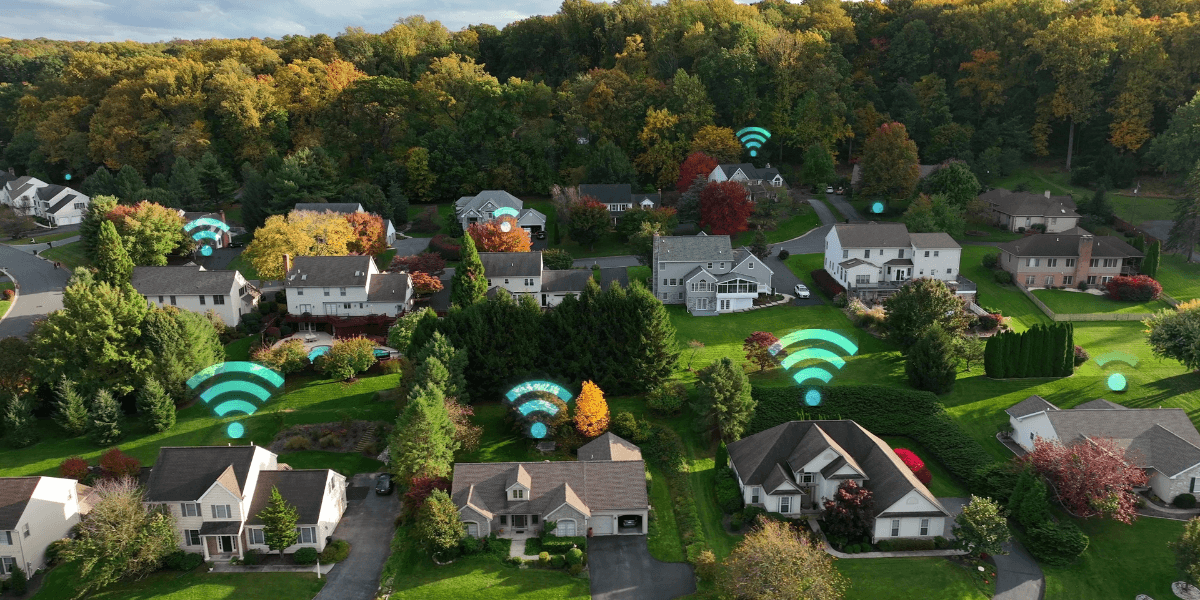
Hablemos del cronograma, porque la pregunta no es solo "¿llegará BEAD?", sino "¿cuándo?". Esta es la respuesta honesta: la construcción está en marcha ahora en 2026, pero la mayoría de las comunidades rurales no verán fibra o inalámbrico fijo El proyecto BEAD no llegará a sus calles hasta 2027 o 2028. La implementación completa del programa BEAD se extenderá desde 2026 hasta 2030, por lo que si su área se encuentra más tarde en la lista de espera de financiación, es posible que tenga que esperar hasta 2029 o principios de 2030.
Esto no pretende desanimar. Significa que BEAD es real y que el cronograma es real. Ya se han iniciado las obras. Pero esperar de dos a cuatro años con una mala conexión a internet es mucho tiempo cuando se intenta gestionar un negocio, ayudar a los niños con sus tareas o acceder a la telemedicina. Por eso, la siguiente sección es importante.
Tres opciones realistas que pueden cambiar tu experiencia en internet a partir de este mes, no en 2027.
Starlink Es la actualización más inmediata disponible para casi cualquier domicilio rural con vista despejada al cielo. Los planes mensuales van desde $[shortcode] hasta $[shortcode], según la velocidad que elija. El kit de equipo estándar cuesta $349 por adelantado. Usted mismo lo instala, lo que generalmente toma menos de una hora. Las velocidades en la mayoría de las zonas rurales alcanzan entre 50 y 200 Mbps, lo que representa un salto enorme con respecto al DSL o la falta de servicio. No hay límites de datos. Starlink Es un servicio mensual sin contrato, por lo que cuando la fibra BEAD llegue a su domicilio, podrá cancelarlo. Starlink sin penalización.
Algo a tener en cuenta: Starlink utiliza una tecnología llamada CGNAT Para algunos clientes, esto puede interferir con los juegos en línea si usa ciertos juegos multijugador. Para la mayoría de las personas que trabajan de forma remota, transmiten en directo o navegan por internet, esto no importará. Pero si hay un jugador en casa, pregunte sobre la compatibilidad con CGNAT cuando verifique StarlinkDisponibilidad en su domicilio.
Si su dirección recibe cobertura 5G de T-Mobile or VerizonVale la pena comprobarlo antes de comprometerse con cualquier otra cosa. T-MobileEl servicio de Internet doméstico 5G de cuesta entre $[shortcode] y $[shortcode] al mes, dependiendo del plan. VerizonEl plan 5G Home cuesta entre $[shortcode y $shortcode al mes. Ninguno requiere contrato y ambos son de auto instalación. Se pueden alcanzar velocidades de 100 a 300 Mbps en zonas con buena cobertura. El inconveniente: la cobertura 5G en zonas rurales aún es irregular y está en expansión.
Muchas zonas rurales cuentan con proveedores locales o regionales de internet inalámbrico fijo que envían una señal desde torres a receptores en su hogar. Las velocidades varían ampliamente, desde 25 Mbps hasta 300 Mbps, dependiendo del proveedor y su distancia a la torre. Los precios son inconsistentes, pero muchos proveedores de servicios de internet locales ofrecen un mejor servicio al cliente que las operadoras nacionales. Es importante destacar que algunas de estas compañías locales de internet inalámbrico fijo son subbeneficiarias de BEAD, lo que significa que eventualmente le actualizarán a una red de mayor capacidad. fibra en el marco del programa BEAD.
Utilice los cinco pasos anteriores para averiguar si la financiación de BEAD llegará a su dirección específica y qué ISP la construirá. Luego, utilice la herramienta de búsqueda de código postal a continuación para ver Todos los proveedores de internet disponibles en tu hogar hoy. Compruebe si StarlinkEl internet doméstico 5G o un proveedor local de conexión inalámbrica fija pueden solucionar el problema hasta que llegue la fibra óptica o la conexión inalámbrica fija financiadas por BEAD.
El objetivo es tomar una decisión informada. Si la construcción de BEAD está a dos años de distancia y actualmente está en satélite, que es más lento que el acceso telefónico, Starlink La conexión 5G para el hogar tiene mucho sentido ahora mismo. Si faltan cuatro años para su llegada, actualizarse casi con toda seguridad merece la pena. Guarda en tus favoritos el registro de adjudicaciones de la oficina estatal de banda ancha para saber cuándo llega la fibra óptica a tu calle. Cuando comience la construcción, tu situación cambiará para siempre.
Reduce tu factura de Internet
El 61% de las personas paga de más por internet.
¿Eres uno de ellos?
¡Desbloquea ofertas exclusivas en tu zona!
Llama ahora
[tel]Introduzca código postal
No en todas partes, pero en la mayoría de los lugares, sí. El objetivo principal de BEAD es conectar ubicaciones rurales sin servicio o con servicio deficiente. Si actualmente está utilizando satélites de la vieja escuela (que tienen una latencia de más de 600 milisegundos y límites de datos), es probable que BEAD le brinde fibra óptica, acceso inalámbrico fijo o incluso los nuevos satélites de órbita terrestre baja como Starlink a su dirección. Dicho esto, algunas zonas muy remotas podrían seguir dependiendo de la tecnología satelital como parte del despliegue de BEAD. Consulte la propuesta final de su estado para ver qué tecnología está prevista para su ubicación específica.
El FCC El mapa de cobertura de banda ancha puede ser inexacto. Si cree que su dirección está clasificada incorrectamente, la mayoría de los estados cuentan con un proceso formal de impugnación donde puede presentar pruebas (como resultados de pruebas de velocidad de su conexión real) para cuestionar la clasificación. El plazo para presentar una impugnación suele estar abierto durante algunos meses al año. Consulte el sitio web de la oficina de banda ancha de su estado para conocer el período actual de impugnación y las instrucciones. Si su impugnación es exitosa, su dirección podrá optar a la financiación del programa BEAD.
No. Los fondos del programa BEAD se destinan a proveedores de servicios de internet y cooperativas de banda ancha para la construcción de infraestructura, no a hogares individuales como subsidios. Sin embargo, algunos estados han reservado fondos del BEAD para programas de accesibilidad económica, lo que significa que la banda ancha financiada por este programa podría ofrecerse a precios reducidos a hogares de bajos ingresos. Consulte la propuesta final de la oficina de banda ancha de su estado para verificar si se incluyeron disposiciones de accesibilidad económica.
[ 1 ] ntia.gov. “Panel de control del progreso de BEAD.”
[ 2 ] broadbandusa.ntia.gov. “Recursos públicos relacionados con los planes y los hitos de BEAD.”
[ 3 ] comptroller.texas.gov. “Programa de Equidad, Acceso e Implementación de Banda Ancha (BEAD)”.
[ 4 ] psc.wi.gov. “Proceso BEAD.”
[ 6 ] broadbandbreakfast.com.Louisiana "BEAD obtiene la primera tanda de aprobaciones de la NEPA."
[ 8 ] rcrwireless.com. “Cinco estados están logrando avances reales en BEAD.”
[ 9 ] mosaic51.com. “Todo lo que necesitas saber sobre el Programa BEAD.”
[ 10 ] broadbandmap.fcc.gov. “Mapa Nacional de Banda Ancha de la FCC.”
[ 12 ] budgetseniors.com.Starlink Coste mensual: Todos los planes y tarifas."
¿Quieres dejar una reseña para? AT&T ¿Internet?
Acerca del autor.
Ingrese su código postal para encontrar todos los proveedores de servicios de Internet disponibles en su área
Habla con un especialista para desbloquear ofertas en tu área
[tel]
Infinity Sales Group, LLC