
Lower your internet bill
61% of people overpay for their internet.
Are you one of them?
Unlock exclusive offers in your area!
Call now
[tel]Enter zip code
 Use code: KALA & receive a $50 gift card with your order!
 Are you happy with your Internet service?

About the author
Let’s settle this up front: Starlink Direct to Cell is not a replacement for home internet. Not now, not in its current form, and not for the foreseeable future. It’s a satellite emergency and dead-zone coverage layer for your phone, not a broadband connection you can build a household around.
What it actually does is impressive, though, and understanding exactly where the capability starts and stops matters if you’ve seen the headlines and wondered whether you can cancel your home internet plan and lean on your phone instead. You can’t… and here’s exactly why, and what the service is actually good for.
61% of people overpay for their internet.
Are you one of them?
Unlock exclusive offers in your area!
Call now
[tel]Enter zip code
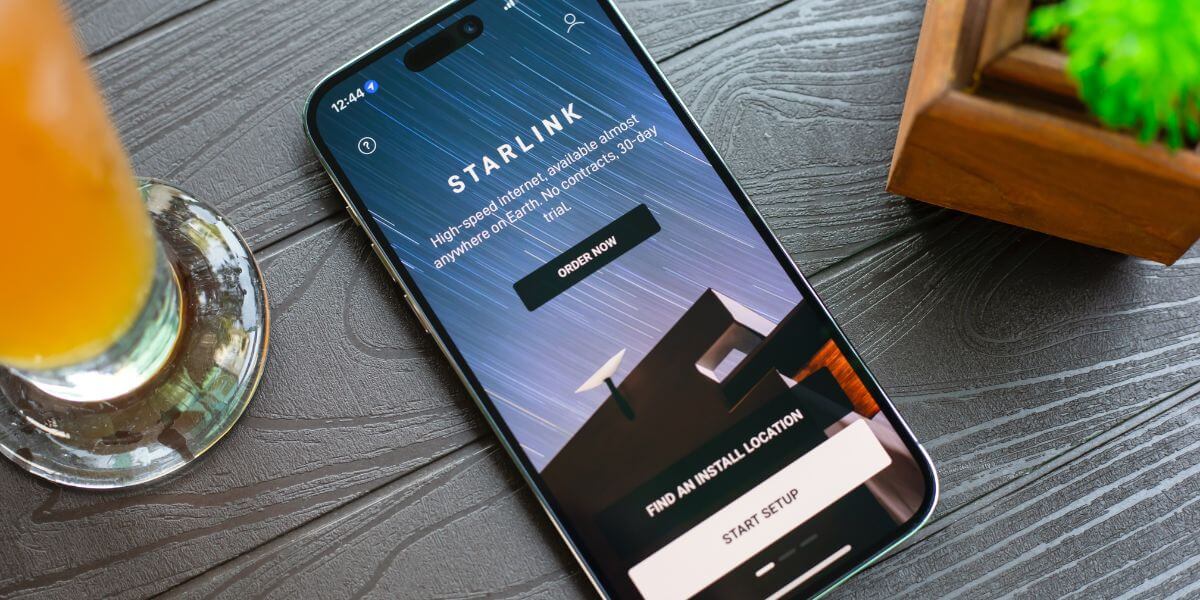
Starlink Direct to Cell lets an ordinary LTE smartphone connect straight to a satellite the same way it connects to a ground tower. There’s no dish, app, or firmware update. Each satellite carries a phased array antenna that functions as a cell tower in orbit, creating a moving coverage cell tens of kilometers wide that sweeps the ground as it passes overhead.
The FCC approved the arrangement in November 2024 under a new regulatory category built for satellites that share a carrier’s own spectrum to fill gaps in ground coverage [1]. More than 650 satellites now carry the payload, making it the largest satellite-to-phone network in the world by coverage area [2].
How T-Mobile’s T-Satellite Service Works
T-Mobile sells its version as T-Satellite with Starlink, which launched commercially on July 23, 2025, after nearly a year of beta testing [3]. It’s $10 a month as an add-on, or free with Experience Beyond and Go5G Next plans. Coverage spans the continental U.S., Puerto Rico, Hawaii, and parts of Alaska, with roaming in Canada, New Zealand, and Japan, and emergency texting to 911 works free on any carrier.
About 60 phone models are currently compatible, and the service requires LTE… nothing limited to 3G or 2G will connect. AT&T and Verizon customers can add T-Satellite too, as long as their phone is unlocked with an open eSIM slot [4]. T-Mobile does hold a one-year exclusivity window as SpaceX’s sole U.S. carrier partner, running from the July 2025 launch, though other carriers’ customers can already buy access today.
Texts typically land with latency under 10 seconds, which isn’t instant, but it is reliable [5]. Since October 2025, T-Mobile has expanded T-Satellite beyond texting to support data for a growing list of optimized apps, including WhatsApp voice and video, mapping, weather, and social media [2]. That’s good progress, but Starlink DTC speed on today’s satellites is still limited throughput, not general browsing or streaming.
SpaceX’s next-generation V2 satellites, targeted for mid-2027 via Starship, are designed to deliver “5G-class speeds from space" with up to 100 times the data density of the current generation, as part of a planned constellation of roughly 1,200 units [2]. Even then, a coverage cell shared by everyone underneath it works nothing like a dedicated wire to your house.
| What Starlink Direct to Cell Does Now | What It Doesn’t Do |
| Sends texts, SOS alerts, and location shares with no dish or app | Support full mobile browsing, streaming, or video calls at broadband speeds |
| Connects automatically once you’re outside ground coverage | Work indoors or under heavy tree cover |
| Handles data for a growing list of optimized apps | Replace a wired or fixed wireless connection for a household |
| Costs $10/month, or free on top T-Mobile plans | Support simultaneous multi-device use |
| Covers 500,000+ square miles ground towers can’t reach | Guarantee consistent speed, because cells move and are shared |
Starlink Mobile vs. Starlink Home Internet: What’s the Difference?
Much of the confusion here comes from Starlink selling three different products under overlapping names:
If you’re comparing Starlink mobile vs Starlink home internet, you’re choosing between two broadband products. Direct to Cell isn’t in that conversation.
Does Starlink Direct to Cell Replace Home Internet?
No, and the reason is physics, not marketing. A fiber, cable, or fixed wireless connection is a dedicated pipe to your address. A Direct to Cell coverage cell is shared by everyone beneath it, which caps what the service can promise a household even as satellites improve. It shines for dead zones for hikers, boaters, rural residents outside ground coverage, and anyone who wants a texting-and-911 safety net. It falls short on anything a household depends on daily, though, such as video calls, streaming, remote work, several devices online at once.
If you’re figuring out what will actually cover your home, compare internet providers that serve your address directly rather than counting on a phone feature built for emergencies. An internet comparison across the best internet providers available in your area (including real Starlink Residential plans alongside cable, fiber, and fixed wireless) will tell you more about internet prices and realistic speeds than any satellite-to-phone spec sheet can.
Satellite phone internet in 2026 is still early. T-Mobile’s exclusivity window is closing around the one-year mark from its July 2025 launch, rival carriers are pushing their own direct-to-device plans, and SpaceX’s V2 satellites aren’t expected before 2027. Expect messaging and app-data capability to keep expanding steadily, but the underlying model isn’t likely to change. This is a coverage extension for your existing phone plan, not a competitor to the internet plan running to your house.
Ready to find internet that can actually handle your household? Use the zip code lookup tool below to compare internet providers available at your exact address—including real Starlink Residential plans alongside cable, fiber, and fixed wireless options.
61% of people overpay for their internet.
Are you one of them?
Unlock exclusive offers in your area!
Call now
[tel]Enter zip code
A satellite service connecting unmodified LTE smartphones directly to Starlink satellites for texting, emergency alerts, and select app data — no dish or special hardware needed — when you’re outside your carrier’s ground coverage.
No. It’s a coverage layer for texting and limited data in dead zones, not a broadband connection, and it can’t support the browsing, streaming, or multi-device use a household needs.
$10 a month as an add-on for most T-Mobile plans, free with Experience Beyond and Go5G Next, and available to AT&T and Verizon customers with an unlocked, eSIM-capable phone. Emergency 911 texting is free on any carrier.
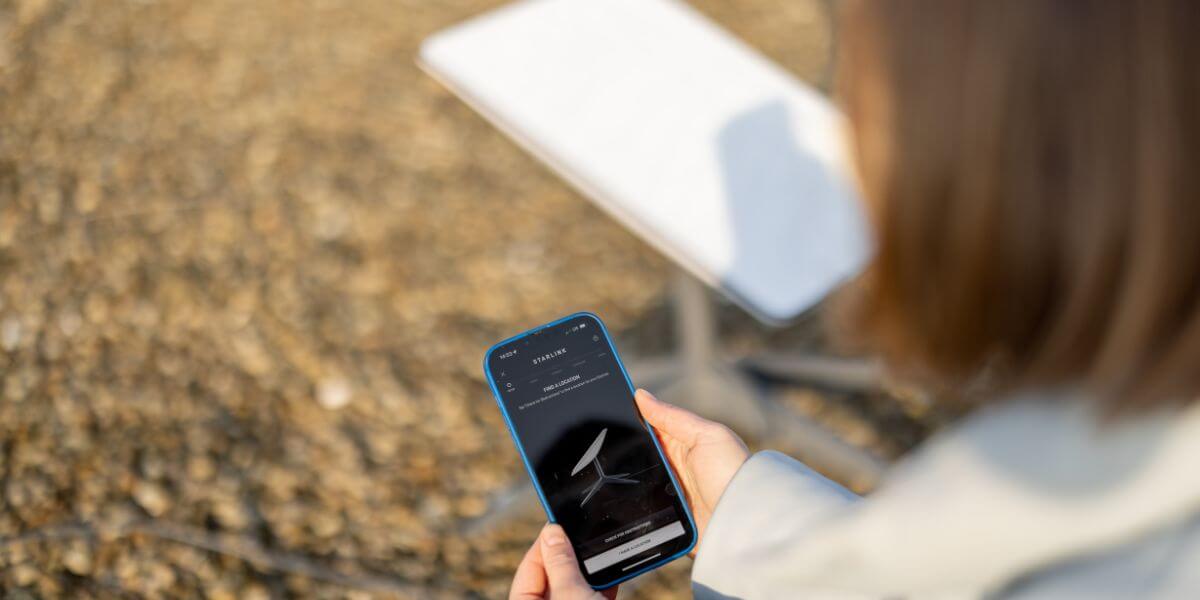
Starlink Mobile (Roam) and Starlink Residential are both dish-based broadband — one portable, one fixed. Direct to Cell has no dish at all; it uses your phone’s antenna for texting and limited data only.
[1] Broadband Breakfast. “FCC Approves SpaceX and T-Mobile’s Direct-to-Cell Service."
[2] 5gstore.com. “T-Mobile T-Satellite Is Getting a Huge Upgrade."
[3] Broadband Breakfast. “T-Mobile and Starlink Satellite Service to Officially Launch July 23."
[4] SatelliteInternet.com. “Starlink T-Satellite: Cost, Compatible Phones & Coverage (2026)."
[5] US Mobile. “Starlink Satellite Calls On Your Phone: Complete Direct-to-Cell Guide (2026)."
Do you want to leave a review for AT&T Internet?
About the author

Infinity Sales Group, LLC