
Lower your internet bill
61% of people overpay for their internet.
Are you one of them?
Unlock exclusive offers in your area!
Call now
[tel]Enter zip code
 Use code: KALA & receive a $50 gift card with your order!
 Are you happy with your Internet service?

About the author
If your internet just came back after being down for hours (or days), most internet providers will credit your bill for the outage, but almost none of them will do it automatically. You have to ask, and you may have to ask more than once. How much you get back depends on which provider you have, how long you were out, and occasionally, what state you live in.
There’s no federal law that forces this. The FCC has no rule requiring providers to automatically credit customers for outages of any length—credit terms live in each provider’s Terms of Service, and those are written to favor the provider [1].
That could be changing, though. In 2026, Senator Ben Ray Luján introduced the Outage Refund Guarantee Act, which would require cable, satellite, phone, and internet providers to automatically issue a credit for any outage lasting more than four hours [2]. As of this writing, it’s still just a bill, not the law.
61% of people overpay for their internet.
Are you one of them?
Unlock exclusive offers in your area!
Call now
[tel]Enter zip code
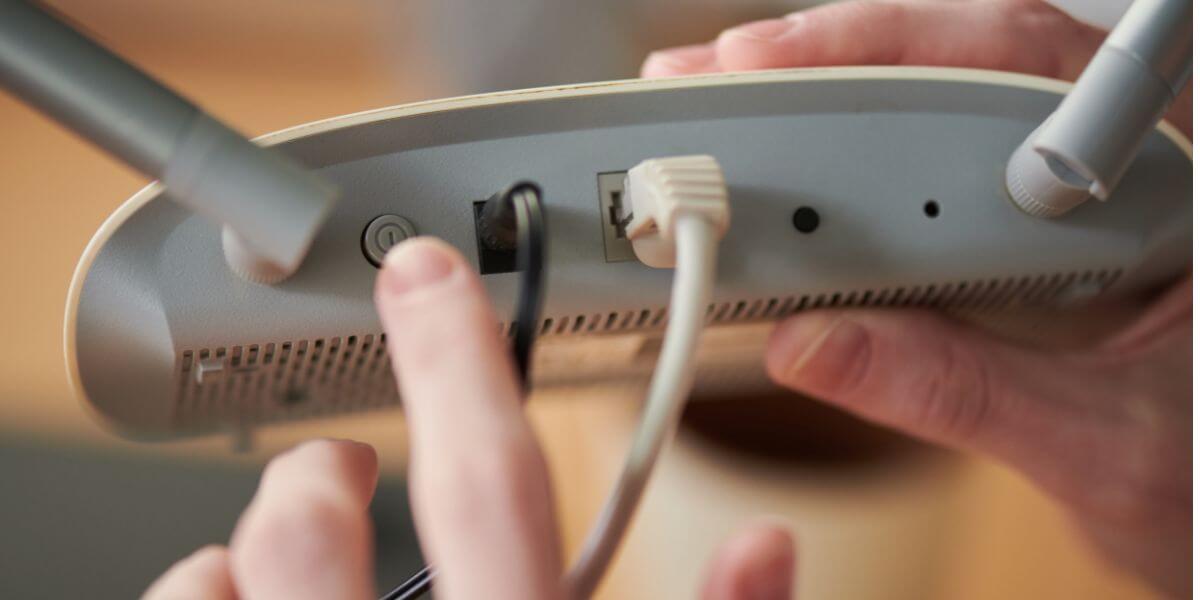
Is an outage credit a right, or just a courtesy?
For most people, it’s a courtesy—discretionary, and dependent on you asking for it before a deadline passes. A handful of states have carved out exceptions. Louisiana requires utility and internet providers to credit customers for outages longer than 24 hours, though that rule only kicks in during a governor-declared disaster or emergency [3]. New York has a bill pending—the Internet Service Outage Consumer Protection Act—that would require automatic, prorated credits for any outage over one hour, but it hasn’t passed as of this writing [4].
California’s utilities regulator adopted new rules in 2025 requiring automatic customer credits for prolonged outages, though those currently apply to landline and VoIP phone service rather than broadband internet specifically [5]. Your action item? Check your state, but plan on asking either way.

How much should you expect back?
Providers that do offer credits almost always prorate them: your outage length, divided by 30 days, multiplied by your monthly bill. The average U.S. household pays about $81 a month for internet [6], which works out to roughly $2.70 a day. A 24-hour outage should be worth around $2.70-$5.50 depending on how your provider rounds; a three-day outage should land closer to $8-$16. If a rep offers you a flat $5 for a two-day outage, that’s a starting offer, not the final one. Ask them to prorate it against your actual monthly rate instead.
Every provider requires you to request the credit yourself, but the fine print (how long the outage needs to last, and how long you have to ask) varies more than most customers realize.
| Provider | Minimum outage to qualify | How it’s issued | Window to request |
| Spectrum | 2+ consecutive hours | Manual request, prorated | 60 days after outage ends |
| Xfinity (Comcast) | Not published; self-service tool decides | Manual request via app or Status Center | Varies; monthly cap reported by customers |
| AT&T | 20+ minutes (fiber), 60+ minutes (wireless) | Automatic—no request needed | N/A, applied automatically [7] |
| Cox | Not published—Cox must be solely at fault | Manual request by phone | Not published |
| Verizon Fios | Not published | Manual request by phone; TV/internet only | Not published |
AT&T stands out here. Since early 2025, its “AT&T Guarantee" program has automatically credited fiber customers a full day of service for any outage of 20 minutes or more, without requiring a call, which is a meaningfully different model than the rest of the industry, which still puts the burden on the customer.
Xfinity customers can check eligibility and request a credit through the Xfinity Status Center, though multiple users have reported running into monthly caps well before their actual downtime was covered.
Cox and Verizon Fios don’t publish a specific hour threshold at all. Both essentially say credit is available at their discretion if you call and explain what happened.
The process is nearly identical across providers:

What if your provider won’t budge?
If you’re getting flat “we can’t do that" responses, or the provider you have has a habit of outages with no real compensation to show for it, that’s also useful information… about your provider, not just this outage.
It might be worth taking twenty minutes to compare internet providers available at your address. In a lot of ZIP codes there’s more competition on price and reliability than people assume, especially now that fixed wireless has pushed into markets that used to be single-provider.
A quick internet comparison of current internet prices and plans near you can tell you whether switching providers would actually save money, or whether your existing provider is already your best option and worth staying with—credit disputes and all.
Enter your zip code below to see what’s available in your area.
61% of people overpay for their internet.
Are you one of them?
Unlock exclusive offers in your area!
Call now
[tel]Enter zip code
No. Xfinity requires you to request a credit yourself, usually through the Xfinity app or the online Status Center, which checks your address against known outages before approving it.
It depends on the provider. Spectrum’s published threshold is two consecutive hours; AT&T Fiber’s automatic guarantee kicks in at just 20 minutes. Cox and Verizon Fios don’t publish a minimum, so it’s worth asking even for a shorter outage.
Usually not. Most ISP refund policies for downtime exclude outages caused by events outside the provider’s control, including storms, power failures, and other force majeure events — even if your service was down just as long.
Not exactly. A service credit is applied to a future bill rather than paid back to you directly, so you won’t see cash — you’ll see a lower amount due next cycle.
[1] Spectrum. “2026 FCC Annual Customer Notification."
[2] Senator Ben Ray Luján. “Luján Introduces Legislation to Refund Customers for Network Outages."
[3] Louisiana State Legislature. “SB 352 (2022 Regular Session)."
[4] New York State Senate. “Assembly Bill A3414 — Internet Service Outage Consumer Protection Act."
[6] BroadbandNow. “The Cost of Staying Connected in 2026."
[7] AT&T. “AT&T Expands America’s Best Guarantee to Millions of Households Nationwide."
Do you want to leave a review for AT&T Internet?
About the author

Infinity Sales Group, LLC