
Lower your internet bill
61% of people overpay for their internet.
Are you one of them?
Unlock exclusive offers in your area!
Call now
[tel]Enter zip code









 Use code: KALA & receive a $50 gift card with your order!
Are you happy with your Internet service?

About the author
Shopping for internet? You’ve probably come across the different types of internet available, like cable, fiber, and satellite. You have also probably seen the phrase “fiber-powered.” It sounds like a promise that fiber optic cable runs all the way to your house. In most cases, it does not. To those not well versed in internet technology (which are most internet shoppers) they would assume that “fiber-powered” means fiber internet. It doesn’t, and that is why the terminology is now the subject of a federal lawsuit, and it is a good reason to learn the difference between hybrid fiber-coax (HFC) and fiber to the home (FTTH).
So, let’s discuss the AT&T and Comcast lawsuit, how each type of network works, and where each one is strong or weak. Find out which internet types are available at your address by entering your zip code below.
Lower your internet bill
61% of people overpay for their internet.
Are you one of them?
Unlock exclusive offers in your area!
Call now
[tel]Enter zip code
On November 13, 2026, AT&T sued Comcast in the U.S. District Court for the Northern District of California. The case is AT&T Teleholdings Inc. v. Comcast Cable Communications LLC. AT&T says Comcast’s ads for “Fiber-Powered internet” and “Fiber-Powered Wi-Fi” mislead people into thinking Xfinity is a fiber-to-the-home service, when most Xfinity connections reach the home over coaxial cable. AT&T argues the claims are “literally false or false by necessary implication.” It is seeking money damages and a court order to stop Comcast from calling its service “fiber powered.”
This fight did not start in court. In June 2026, AT&T challenged the same ads with the National Advertising Division (NAD), the advertising industry’s self-regulatory body run by BBB National Programs. NAD looked at Comcast’s disclosure, which reads “Xfinity Internet is powered by fiber and connected to premises by coaxial cable.” It decided the wording explained the network accurately enough. However, NAD also found the disclosure was too easy to miss. In some ads, it sat several panels away from the “fiber-powered” claim, and nothing pointed readers to it. NAD told Comcast to make the disclosure more prominent and to place it closer to the claim, and Comcast said it would comply.
Comcast is not the only target. In March 2026, Charter agreed to change the “fiber-powered” disclosures in its Spectrum ads after a similar AT&T challenge. AT&T then sued Charter in federal court in Texas in August 2026 anyway.
Keep in mind who is bringing these cases. AT&T sells its own fiber service and competes directly with Comcast and Charter for customers, and the two sides have challenged each other’s ads for years. A lawsuit contains allegations, and a court has not ruled on any of them. Still, the case raises a fair question for anyone shopping for internet: what is the real difference between these two networks?
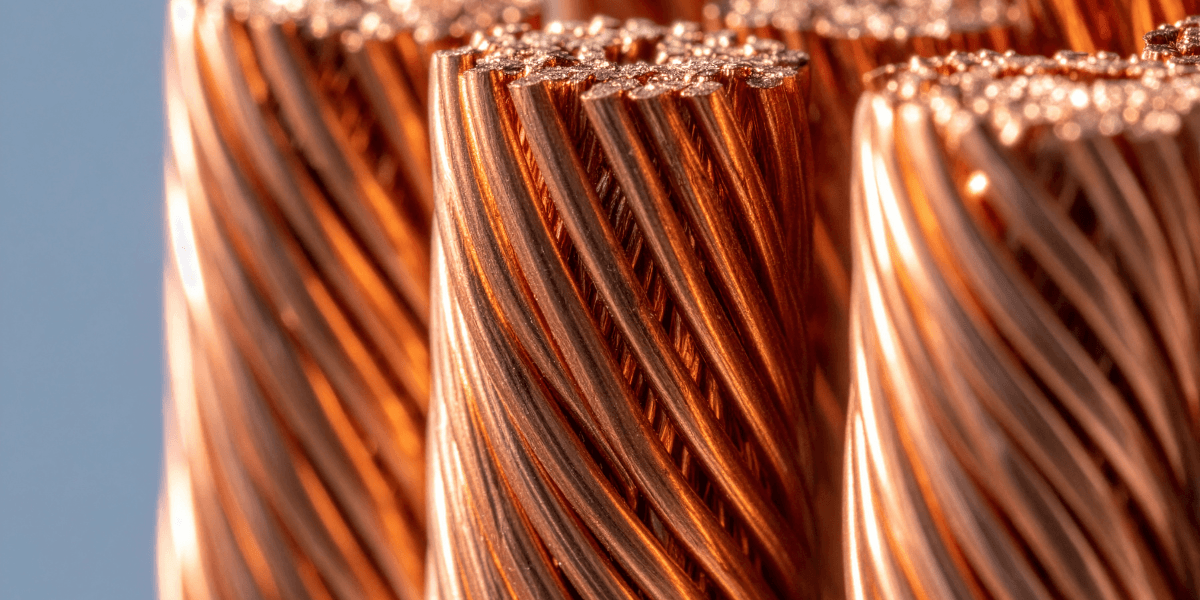
The final stretch isn’t fiber
Hybrid fiber-coax (HFC) is the network design that cable companies like Xfinity, Spectrum, Cox, Mediacom, and Optimum use. As the name says, it combines two kinds of cable.
Fiber optic lines carry data from the provider’s regional hub out to a box in your neighborhood called an optical node. At the node, the light signal turns into a radio frequency signal. Coaxial cable then carries that signal the rest of the way to the cable modem in your home. According to CableLabs, the cable industry’s research group, fiber makes up most of an HFC network, and the coax portion usually covers about the last half mile.
So when a cable company says its network is “fiber-powered,” it is pointing to something true. Most of the distance your data travels does run over fiber. The catch is that the final stretch, the part that connects to your home, does not.
With fiber to the home, the fiber optic line runs all the way from the provider’s network into your house. Instead of a cable modem, you get a device called an optical network terminal (ONT) that converts the light signal for your router. No coaxial or copper segment sits between you and the network.
AT&T Fiber, Verizon Fios, Google Fiber, Frontier Fiber, Quantum Fiber, and many regional and municipal providers use this design. Fiber is also spreading fast. The Fiber Broadband Association reports that fiber now passes more than 60% of U.S. households, after a record 11.8 million new homes were added in 2025 alone.
On paper, both networks can sell you a gigabit plan. In daily use, a few key differences show up.
Upload speed is the biggest gap. Fiber plans usually offer symmetrical speeds, which means your upload matches your download. AT&T Fiber, for example, offers symmetrical tiers up to 5 Gig.
HFC networks have historically set aside only a small slice of their capacity for uploads. Plan listings show Xfinity’s 1 Gig plan with upload speeds around 100 Mbps and its 2 Gig plan around 250 Mbps in many areas. That is plenty for streaming and browsing. However, you will notice the difference if you back up photos to the cloud, upload large video files, run a home security system with several cameras, or spend your workday on video calls while others in the house are online.
Ookla’s Speedtest data for the first half of 2026 shows this pattern well. AT&T Fiber ranked as the fastest fixed network in the country, with a median download speed of about 375 Mbps and a median upload of about 321 Mbps. Spectrum came in second for downloads at about 352 Mbps. In other words, the download gap between the top fiber and cable networks was small, but fiber pulls ahead on uploads.
Latency is the delay between when you send a request and when the network responds. It affects online gaming, video calls, and anything interactive. Fiber generally delivers lower and steadier latency. Ookla has noted that cable networks are more prone to “bufferbloat,” a slowdown that happens when the limited upload lane gets crowded and traffic backs up during busy times.
HFC’s shared nature plays a role here too. Homes in a neighborhood share capacity on the same coaxial segment, so heavy use by your neighbors in the evening can affect your connection more than it would on most fiber networks.
Fiber has enormous capacity, and providers can usually raise speeds by upgrading the equipment at each end of the line rather than replacing the line itself. That is why fiber providers can roll out multi-gig plans without tearing up streets again.
Cable companies are upgrading as well. Comcast is moving its network toward DOCSIS 4.0, the newest cable standard, which supports multi-gig symmetrical speeds over existing coax. As a first step, Comcast has been completing “mid-split” upgrades that widen the upload lane. Light Reading reported that about 32% of Comcast’s cities had been upgraded by mid-2026, mostly with mid-splits. Where Spectrum has completed its larger “high-split” upgrades, Ookla found median upload speeds jumped roughly elevenfold, to about 224 Mbps. Meanwhile, upload speeds in un-upgraded cable areas barely moved. That means your cable experience depends heavily on whether your neighborhood has been upgraded yet.
An honest comparison has to credit cable for what it does well. HFC networks reach far more homes than fiber does in many regions, so cable is often the fastest wired option available, especially in suburbs and smaller towns fiber hasn’t reached. Cable download speeds also compete closely with fiber, as Ookla’s 2026 results show. If your household mostly streams, browses, and games casually, a well-maintained cable connection can serve you very well.
Cable companies also compete hard on price and perks, such as multi-year price guarantees and bundled mobile service. Those deals can make cable the better value for some households even when fiber is available.

Sometimes Xfinity has pure fiber
For most customers, no. Most Xfinity homes connect through HFC, which is why Comcast’s own disclosure says the service is “connected to premises by coaxial cable.” There are exceptions, though. Comcast says it offers a symmetrical fiber-to-the-home tier in all of its markets, though that product has historically carried premium pricing and installation requirements. Comcast is also building new fiber networks in some expansion areas, such as parts of Connecticut and Bryan-College Station, Texas. In those places, Xfinity customers may have true fiber.
The same logic applies to Spectrum. Its “fiber-powered” service runs mostly on HFC, while some of its newer rural builds use fiber.
If true fiber is available at your address and the price works for your budget, it is usually the stronger long-term choice. You get symmetrical speeds, lower latency, and a network with plenty of room to grow. Fiber makes the most sense for remote workers, content creators, gamers, and busy households with many connected devices.
If fiber is not available, or a cable deal is clearly better for your budget, HFC is still a solid option, especially in neighborhoods that have received recent upgrades.
“Fiber-powered” describes what happens upstream of your neighborhood. “Fiber to the home” describes what reaches your house. When you shop, make sure you know which one you are paying for.
Lower your internet bill
61% of people overpay for their internet.
Are you one of them?
Unlock exclusive offers in your area!
Call now
[tel]Enter zip code
No. “Fiber-powered” usually means the provider uses fiber in the main part of its network but delivers the final connection to your home over coaxial cable. True fiber internet, also called fiber to the home, runs fiber all the way into your house.
For downloads, the difference is often small, and top cable networks post download speeds close to leading fiber providers. The bigger gap is in upload speeds and latency, where fiber typically performs better because it offers symmetrical speeds and does not rely on a shared coaxial segment.
Cable is closing the gap. DOCSIS 4.0 and mid-split and high-split upgrades are bringing faster uploads and symmetrical multi-gig plans to some areas. However, these upgrades are rolling out neighborhood by neighborhood, so performance still varies widely depending on where you live.
[1] CourthouseNews.com “AT&T sues Comcast over Xfinity ‘fiber-powered’ home internet”
[2] TradingView.com “AT&T sues Comcast over ‘fiber-powered’ internet advertising”
[3] WiseVoter.com “AT&T Sues Comcast Over Xfinity Fiber Ads”
[4] BBBPrograms.org “National Advertising Division Finds Xfinity Internet ‘Fiber-Powered’ Claim Supported; Recommends Disclosure Modification”
[5] BBBPrograms.org “In National Advertising Division Challenge, Spectrum Voluntarily Modifies ‘Fiber-Powered’ Spectrum Internet Disclosures”
[6] LightReading.com “AT&T goes to the mat over Charter’s use of ‘fiber-powered’ label for HFC”
[7] CableLabs.com “Hybrid Fiber-Coaxial (HFC) Networks”
[8] LightReading.com “Miami broadband speed is slowest among US cities – Ookla”
[9] CommunityNetworks.org “Municipal Broadband Leaves Big National ISPs in the Dust, Report Finds”
[10] ConvergeDigest.com “Comcast: DOCSIS 4.0, Network Overhaul, Simplified Pricing”
[11] LightReading.com “Upstream speeds accelerate where cable has done the ‘splits’ – study”
Do you want to leave a review for AT&T Internet?
About the author

Infinity Sales Group, LLC