
Lower your internet bill
61% of people overpay for their internet.
Are you one of them?
Unlock exclusive offers in your area!
Call now
[tel]Enter zip code









 Use code: KALA & receive a $50 gift card with your order!
Are you happy with your Internet service?

About the author
Is Brightspeed your internet provider? You might be surprised to learn that two Brightspeed customers on the same road can have completely different experiences. One household streams the new Spider-Man movie in 4K with ease and backs up photos of their one-year-old’s first steps without a hiccup. The other household is waiting 2 minutes for the weather app to load and has to ask their teenager to pause their online video game before making a work call. Both pay Brightspeed, but one connects through brand-new fiber-optic lines while the other still relies on the copper phone lines the company inherited from CenturyLink.
Brightspeed is in the middle of one of the largest fiber builds in the country, and it is replacing much of that old copper network as it goes. That means millions of current customers will face the same question at some point: should you upgrade to Brightspeed Fiber as soon as it reaches your street, and what changes when you do? Read on to understand how Brightspeed’s two networks work, how they compare on speed, reliability, and price, how to tell which one you have, and what to do if fiber has not reached your home yet.
The short answer (for our article skimmers) is that Brightspeed Fiber and Brightspeed’s copper internet are two different products with very different capabilities. Brightspeed’s copper service, sold as Brightspeed Internet, tops out at 20 Mbps and supports about two devices at once. Brightspeed Fiber offers plans from 200 Mbps to 8 Gig, with matching upload and download speeds on every tier, a Wi-Fi 7 router included, and an entry price that is often lower than the copper plan. If fiber is available at your address, upgrading is one of the easiest internet decisions you will ever make. If it is not available yet, you have a few practical options while you wait.
Lower your internet bill
61% of people overpay for their internet.
Are you one of them?
Unlock exclusive offers in your area!
Call now
[tel]Enter zip code
Here is how Brightspeed’s two networks compare across the categories that matter most to households like yours.
For download speed, Brightspeed’s copper plan offers speeds up to 20 Mbps, while Brightspeed Fiber offers plans from 200 Mbps to 8 Gig, so fiber wins by a wide margin.
For upload speed, Brightspeed Fiber delivers equal upload and download speeds on every plan, while copper DSL uploads at a small fraction of its download speed, so fiber wins.
For connected devices, Brightspeed says its copper plan supports up to two devices at once, while its entry fiber plan supports up to 10, so fiber wins.
For reliability, fiber resists weather, interference, and copper theft far better than aging copper lines, so fiber wins.
For price, Brightspeed Fiber’s 200 Mbps plan starts at $29.99 per month with AutoPay, while third-party listings in 2026 have shown the copper plan at about $55 to $65 per month, so fiber often costs less.
For equipment, fiber plans include a Wi-Fi 7 router with no router fee, while the copper plan’s terms note that a $15 monthly router charge may apply, so fiber wins.
For availability, copper reaches far more of Brightspeed’s territory today, so copper wins on reach.
The key takeaway is that copper’s only real advantage is availability, and that advantage shrinks every month as Brightspeed’s fiber build expands.
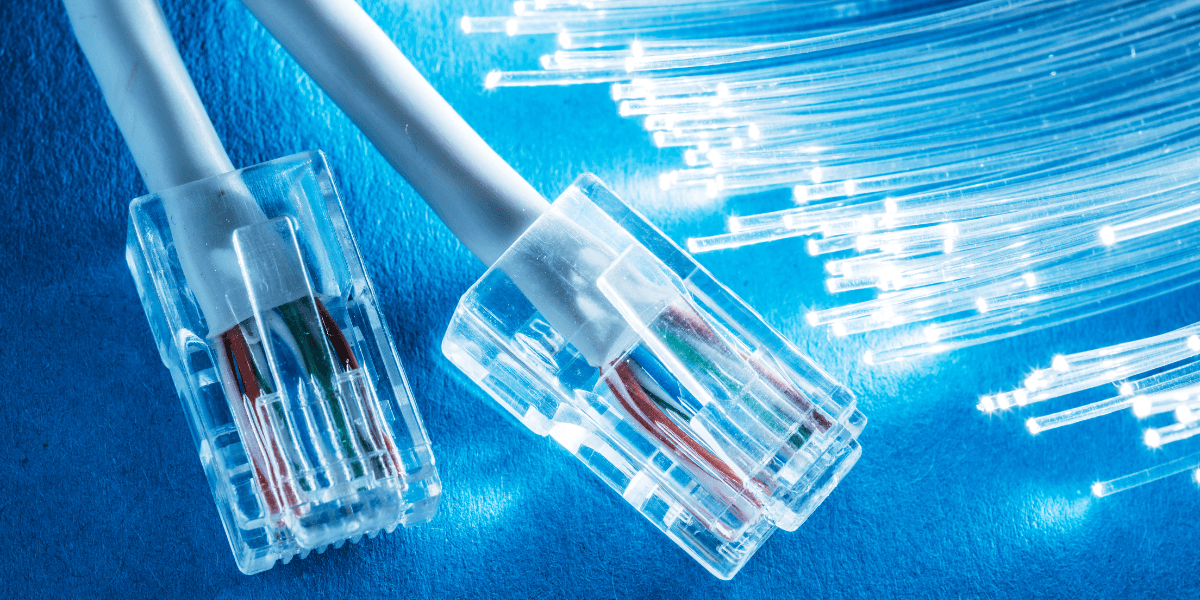
Fiber vs. Copper
Brightspeed is a young company with an old network. In 2022, Lumen Technologies, CenturyLink’s parent company, sold its local telephone and internet operations in 20 states to funds managed by Apollo Global Management for about $7.5 billion. Those operations became Brightspeed, and former CenturyLink customers in those areas officially became Brightspeed customers on October 3, 2022.
Most of what Brightspeed inherited was copper. The network had served homes for decades with landline phone service and, later, DSL internet that ran over those same phone lines. Brightspeed set out to replace much of that copper with fiber, and it has moved quickly. In April 2026, the company announced it had passed more than 3 million fiber-enabled locations, marking its second straight year of building more than 1 million new fiber connections. Brightspeed now calls itself the nation’s third-largest fiber builder, and it expects to reach 4 million homes by the end of 2026 and more than 5 million over the long term.
That progress still leaves a large copper footprint. Brightspeed’s network can serve more than 7.3 million homes and businesses, and the company’s CFO told Fierce Network that about 41% of its footprint was fiber-enabled as of spring 2026. In other words, most Brightspeed addresses still connect over copper today.
Brightspeed serves parts of Alabama, Arkansas, Georgia, Illinois, Indiana, Kansas, Louisiana, Michigan, Mississippi, Missouri, New Jersey, North Carolina, Ohio, Oklahoma, Pennsylvania, South Carolina, Tennessee, Texas, Virginia, and Wisconsin. Fiber coverage varies widely from state to state and even from street to street within the same town.
Brightspeed’s copper service is DSL, or digital subscriber line. DSL sends internet data over the same twisted-pair copper telephone wires that have connected homes to the phone network for generations. Brightspeed describes the service as broadband over your phone line, and the modem plugs into a phone jack in your wall.
DSL has one big physical limitation—the signal weakens as it travels along copper, so your speed depends heavily on how far your home sits from the nearest piece of network equipment. Homes close to that equipment may get the top speed Brightspeed offers, while homes several miles away may get a fraction of it. Older wiring, corrosion, and moisture in the lines can drag speeds down further.
DSL also splits its capacity unevenly, giving most of it to downloads and very little to uploads. That design worked when people mostly read email and browsed the web. It struggles today, when video calls, cloud backups, security cameras, and online games constantly send data out of the home.
Brightspeed’s current copper plan, Brightspeed Internet, offers speeds up to 20 Mbps and supports up to two devices at once. Brightspeed positions it for browsing, email, shopping, and standard-definition streaming. That is enough for light use by one or two people, but it falls short for most modern households.
Brightspeed Fiber is a fiber-to-the-home (FTTH) network. Instead of sending electrical signals over copper, it sends data as pulses of light through thin glass strands that run to your home. Light traveling through glass does not fade over distance the way an electrical signal does over copper, so your speed does not depend on how far you live from the network equipment.
Brightspeed builds its fiber network with XGS-PON technology, which stands for 10-Gigabit Symmetric Passive Optical Network. The word “symmetric” is the important part for you. XGS-PON can carry the same speed in both directions, which is why every Brightspeed Fiber plan offers equal upload and download speeds. Brightspeed has also tested even faster 50G-PON technology with equipment maker Calix on its existing fiber lines, which suggests the network has plenty of room to grow without new construction.
Fiber also uses passive equipment between the network hub and your home, which means fewer powered components sit out in the field where they can fail. Glass does not corrode, and it does not pick up the electrical interference that can disrupt copper lines.
The speed gap between Brightspeed’s two networks is enormous. Here is how the two compare for common activities.
For browsing and email, both networks work, although pages load faster on fiber.
For HD and 4K streaming, Brightspeed’s copper plan is built for standard-definition streaming, while even the entry fiber plan handles HD streaming on several screens.
For video calls, copper’s slow uploads can make your video blurry or frozen, while fiber’s matching upload speeds keep calls clear even when several people are on calls at once.
For online gaming, copper’s limited bandwidth and slower response times can cause lag, while fiber gives gamers fast, steady connections.
For smart homes, copper’s two-device limit leaves little room for cameras, speakers, and smart TVs, while fiber plans support dozens of devices on the faster tiers.
To put the gap in real numbers, imagine downloading a 50 GB video game. At 20 Mbps, the download would take about five and a half hours. On Brightspeed’s 1 Gig fiber plan, which delivers speeds up to 940 Mbps, the same download would finish in about seven minutes over a wired connection.
Upload speed tells an even bigger story. Brightspeed’s 200 Mbps fiber plan uploads at 200 Mbps, so a family can back up a phone full of photos to the cloud in minutes. On copper DSL, uploads run at a small fraction of the download speed, so the same backup can take hours and slow down everything else on the connection while it runs.
Our verdict: Brightspeed Fiber’s entry plan alone offers roughly ten times the download speed of the copper plan, along with dramatically faster uploads.
Speed is the headline, but reliability may matter even more to your daily life. Copper networks age, and Brightspeed’s copper lines have been in the ground and on the poles for a long time. Moisture can seep into old cables, connections corrode, and storms can knock out service. Electrical interference from power lines and appliances can also disrupt DSL signals.
Copper theft has also become a real problem. Thieves strip copper cable for scrap metal, and a Brightspeed spokesperson told Fierce Network that each theft incident causes outages that disrupt customers and require costly repairs. Fiber has no scrap value, so thieves have little reason to target it.
Fiber avoids most of these issues. Glass strands do not corrode; they are immune to electrical interference, and they hold up better in harsh weather. A fiber line can still be cut by construction crews or damaged in a severe storm, but day-to-day performance tends to stay consistent.
Brightspeed’s leadership has said publicly that copper is more costly to maintain and less resilient to the elements. In March 2026, the Federal Communications Commission adopted an order that streamlines how providers can retire aging copper networks, and Brightspeed publicly supported that move as a way to speed its transition to fiber.
Brightspeed shows exact pricing only after you enter your address here. Offers vary by location.
Brightspeed Fiber offers six speed tiers, and every one includes equal upload and download speeds, unlimited data, no annual contract, no termination fees, and a Wi-Fi 7 router with no router fee.
Brightspeed’s AutoPay discount requires paperless billing and payment by debit card or bank account, so paying by credit card typically means a higher monthly price. Brightspeed also offers a 12-month price lock on the monthly service rate, which keeps your plan price steady for your first year. Taxes, fees, equipment charges, and add-on services fall outside that lock, and Brightspeed’s then-current rates apply after 12 months.
For most households moving from copper, the 500 Mbps or 1 Gig plan is the sweet spot. Either one gives every person in your home room to stream, work, and game at the same time, and the price difference between tiers is small.
Brightspeed Internet, the copper DSL plan, offers speeds up to 20 Mbps with no data caps and no annual contract. Third-party listings in 2026 show prices of about $55 to $65 per month, depending on location. Brightspeed’s plan terms note that an installation charge of up to $100 and a $15 monthly router charge may apply. With those potential fees, the copper plan can cost significantly more than the entry fiber plan while delivering a fraction of the speed.
Moving from copper to fiber means new equipment and a new connection to your home, but Brightspeed handles most of the work.
A technician runs a fiber line from the street or utility pole to your home and installs an optical network terminal, usually called an ONT, which converts the light signal into a connection your router can use. Brightspeed offers two installation types. With a Tech Install, a technician completes the outside work and also sets up your router inside the home. With a Standard Install, the technician completes the outside work, and you set up the router yourself.
Brightspeed offers free expert installation when your address does not require construction beyond 1,000 feet or across property you do not own. If your address previously had Brightspeed Fiber, you may qualify for free self-installation. When you qualify, a $100 installation charge appears on your bill along with a $100 credit that cancels it out. If your home needs extra construction, Brightspeed will contact you with a quote, so ask about this before your appointment if you live far from the road.
Brightspeed backs technician installations with an Installation Guarantee made up of three promises. Its Calendar Commitment promises to install your service on the scheduled day, and if Brightspeed misses that date, you receive a one-time $20 credit on your first bill. Its Verified Setup promises that the technician will set up and test your equipment and Wi-Fi before leaving. Its Signature Walkthrough promises that the technician will show you how to use your equipment. If Brightspeed skips the setup or walkthrough, you qualify for 30 days of priority support. The guarantee applies only to technician installs, not self-installs, and it does not cover delays outside Brightspeed’s control, such as weather or access problems at your home.
Every Brightspeed Fiber plan includes a Wi-Fi 7 router, the newest Wi-Fi standard, which helps your devices take advantage of fiber speeds. Keep in mind that older phones and laptops cannot use every Wi-Fi 7 feature, and walls and distance still weaken any wireless signal. For the best performance on a gaming console or work computer, plug it into the router with an Ethernet cable.
Brightspeed also sells optional add-ons. Whole Home WiFi adds extenders for larger homes with dead spots, WiFi Protection adds network security, and Total Home Tech Support costs $10 per month for help setting up and troubleshooting your devices. Most households in average-sized homes can skip the add-ons at first and add extenders later if they notice weak spots.
Many Brightspeed customers are not sure which network they use. Here are a few simple ways to find out.
Check your bill or online account, because Brightspeed’s copper plan is called Brightspeed Internet, while fiber plans carry the Brightspeed Fiber Internet name and a speed tier like 500 Mbps or 1 Gig.
Look at your modem, because a DSL modem connects to a phone jack in your wall, while fiber service connects through an ONT box that is usually mounted on an inside or outside wall with a thin fiber cable running to it.
Run a speed test, because copper customers will see speeds of 20 Mbps or less with much slower uploads, while fiber customers will see much higher speeds with uploads that roughly match downloads.
Brightspeed has said it wants to move its copper customers onto fiber rather than leave them behind. Brightspeed’s executive vice president of operations told Fierce Network that the company remains focused on serving its copper customers, partly because moving an existing customer to fiber is easier than winning a new one. She also noted that many copper customers live in very rural areas that Brightspeed is working to reach as fast as it can.
The company’s funding supports that effort. Brightspeed has been awarded more than $860 million in local, state, and federal broadband grants, which will expand its planned fiber build by more than 338,000 locations. In October 2025, Brightspeed announced that it had won more than $528 million through the federal BEAD program to expand fiber in 17 states, with the largest awards going to Wisconsin, Missouri, and North Carolina.
If you are on copper today, expect fiber offers to show up in your mailbox, inbox, or even at your front door as construction reaches your neighborhood. Brightspeed sends branded sales representatives door to door in many communities where fiber has just launched. Over the long term, the FCC’s 2026 order makes it easier for providers to retire copper lines once better service is available, so copper customers in fiber areas may eventually need to switch.
If Brightspeed Fiber has not reached your address, you still have options. First, check whether a cable provider like Xfinity, Spectrum, or Mediacom serves your home, since cable plans offer much faster speeds than DSL. Second, look at 5G home internet from T-Mobile, Verizon, or AT&T Internet Air, which can work well if you have strong cellular coverage. Third, consider satellite internet from Starlink if you live in a remote area with no other choices, although it typically costs more than other options and requires buying equipment.
Each option comes with trade-offs. Cable usually uploads much more slowly than fiber, 5G home internet speeds can change with network traffic and signal strength, and satellite service can slow down during bad weather. Because Brightspeed’s fiber plans have no annual contracts, it makes sense to avoid locking yourself into a long-term contract with another provider if fiber construction is underway near you. Check back with Brightspeed every few months, because coverage expands constantly.

Weighing the cons
Brightspeed Fiber is a huge step up from copper, but it is not perfect.
Availability is the biggest limitation. Most of Brightspeed’s footprint still runs on copper, and fiber coverage can stop at the end of one street and resume several roads away.
Pricing can feel opaque. Brightspeed shows exact prices only after you enter your address, and prices vary by location, so you cannot always compare plans until you start the ordering process.
The price lock lasts only 12 months. After your first year, Brightspeed’s then-current rates apply, so your bill could rise. Some competitors offer longer price guarantees.
The AutoPay discount requires a debit card or bank account. If you prefer to pay with a credit card, expect a higher monthly price.
Installation can involve extra costs. If your home sits far from the road or requires construction across someone else’s property, Brightspeed may charge additional fees and send you a quote.
Multi-gig plans need the right equipment. To get full speed on the 2 Gig plan and above, you need compatible devices and network cards, and the 8 Gig plan requires a technician installation.
If fiber is available at your home, the case for upgrading is strong for almost everyone. Households with remote workers or students benefit from fiber’s fast, matching upload speeds during video calls. Families with several people online at once benefit because fiber removes the two-device bottleneck of copper. Gamers and streamers benefit from fiber’s speed and steady performance. Budget-minded households often benefit too, because the entry fiber plan can cost less than the copper plan. Even light users who only browse and email gain a more reliable connection that holds up better in storms.
The main reason to wait would be a home that requires costly construction to connect, so ask about installation costs before you commit.
Enter your ZIP code below to check current Brightspeed Fiber plans, pricing, and promotions at your address. If fiber has reached your street, you can compare every plan available at your home and see how much you could save by leaving copper behind.
Lower your internet bill
61% of people overpay for their internet.
Are you one of them?
Unlock exclusive offers in your area!
Call now
[tel]Enter zip code
This article compares Brightspeed’s own two networks, its legacy copper DSL service and its newer fiber-to-the-home service, rather than comparing Brightspeed against other providers. It focuses on the technology differences, performance, pricing, equipment, and upgrade process that matter most to existing Brightspeed customers.
We relied on Brightspeed’s published plan details, offer terms, and installation terms, along with Brightspeed press releases about its network build and funding. We also used reporting from Fierce Network on Brightspeed’s footprint and copper strategy, FCC materials on its 2026 copper retirement order, and plan pricing tracked by third-party comparison sites during 2026. Brightspeed shows final prices only after an address check, so our pricing reflects published starting prices and tracked listings, not a guaranteed quote for any single home.
Speeds, availability, and pricing change frequently and vary by address, so confirm the plans and prices available at your home before you decide. Full citations appear in the Sources section below.
Start by entering your address here or calling 1-877-620-1795 to see whether fiber is available at your home. If it is, you can choose a fiber plan and schedule installation without switching providers. A technician will run fiber to your home and install the new equipment, and your fiber plan will replace your copper plan. Ask about any current promotions and installation costs before you confirm your order.
Brightspeed has said it remains focused on serving its copper customers while moving as many as it can to fiber. In March 2026, the FCC adopted an order that makes it easier for providers to retire aging copper networks, which means copper service may eventually wind down in areas where fiber is available. If fiber has reached your street, upgrading now lets you switch on your own schedule rather than waiting for a change.
[1] Brightspeed.com “Brightspeed Internet: Fast and Reliable Fiber Internet Plans”
[2] Brightspeed.com “Affordable Broadband Internet Plans”
[3] Brightspeed.com “Brightspeed Internet Plan Terms”
[4] Brightspeed.com “Brightspeed Fiber Internet Offer Terms”
[5] Brightspeed.com “Former CenturyLink Customers”
[7] Fierce-Network.com “Brightspeed CFO Jacky Wu Says Convergence Is Real”
[9] FCC.gov “What They Are Saying: Stakeholders Applaud the IP Transition”
Do you want to leave a review for AT&T Internet?
About the author

Infinity Sales Group, LLC