
Lower your internet bill
61% of people overpay for their internet.
Are you one of them?
Unlock exclusive offers in your area!
Call now
[tel]Enter zip code








 Use code: KALA & receive a $50 gift card with your order!
Are you happy with your Internet service?

About the author
The 2026-27 NBA season tipped off on Tuesday, Oct. 20, and if you’re among the cord-cutter crew, you might be wondering how to watch your NBA team. The answer, unfortunately, is more complicated than it used to be. National games now live on three different companies’ platforms, and the collapse of the FanDuel Sports Network sent more than a dozen teams scrambling for new local homes. Some teams now stream on DAZN, some air for free with an antenna, and a few still sit on traditional regional sports networks.
We’ve broken down which games air on which nights, what each streaming service costs, how to find your local team, and how fast your home internet needs to be so you can watch buzzer-beaters in real time, not on a delay because of slow streaming.
Lower your internet bill
61% of people overpay for their internet.
Are you one of them?
Unlock exclusive offers in your area!
Call now
[tel]Enter zip code
Every nationally televised game this season streams on one of three services. ABC and ESPN games stream on the ESPN app, NBC and NBCSN games stream on Peacock, and Amazon’s games stream on Prime Video. NBA TV carries additional national games, and it comes bundled with NBA League Pass.
If you live outside your favorite team’s home market, NBA League Pass covers most of their games that don’t air nationally. If you live inside the market, you need whatever local option your team chose this year, which might be DAZN, a team-run app, a Peacock add-on, or a free over-the-air channel.
Most fans end up combining two or three of these. Your exact mix depends on where you live and which team you follow.
The NBA’s national schedule follows a weekly pattern, making it easier to plan your subscriptions.
Peacock streams games nationwide every Monday night throughout the regular season. It starts on Oct. 26 with the Warriors visiting the Nuggets, and the slate includes a Knicks-Cavaliers rematch of the 2026 Eastern Conference Finals on Dec. 21 in Cleveland. All of these Peacock-exclusive games also air on NBCSN, which matters if you use a live TV streaming service instead of Peacock.
Coast 2 Coast Tuesday features two games every Tuesday. On most weeks, NBC stations in the Eastern and Central time zones show an 8 p.m. ET game, while stations in the Mountain and Pacific time zones show an 8 p.m. PT game. Peacock streams both games nationally. That means an antenna only gets you the game assigned to your region, while a Peacock subscription gets you both.
ESPN carries a Wednesday doubleheader all season long, and every game streams on the ESPN app. The day before Thanksgiving, Nov. 25, ESPN airs three NBA Cup group play games.
Prime Video adds Thursday night doubleheaders beginning in January. Highlights include Jaylen Brown’s return to Boston with the 76ers on Jan. 21.
Prime Video owns Friday nights. The NBA on Prime Video opens on Oct. 23 with the Knicks visiting the Celtics and the Rockets visiting the Spurs at Moody Center in Austin, and doubleheaders continue on most Fridays through the end of the regular season. ESPN also adds select Friday doubleheaders starting in January.
NBA Saturday Primetime on ABC returns on Dec. 12 with the Knicks visiting the Heat. Prime Video adds select Saturday afternoon games beginning in February, including the first matchup between No. 1 pick AJ Dybantsa’s Wizards and No. 2 pick Darryn Peterson’s Jazz on Feb. 27.
Sunday Night Basketball returns to NBC and Peacock on Jan. 24 with the Thunder visiting the Warriors, and the schedule includes seven doubleheaders. ABC’s NBA Sunday Showcase adds three Sunday afternoon doubleheaders in February and March.
The Emirates NBA Cup runs from Oct. 30 through Dec. 11. Prime Video streams five straight Friday night Cup doubleheaders during group play, plus all seven Knockout Round games, including the championship at Hinkle Fieldhouse in Indianapolis.
Christmas Day brings five games on ABC, ESPN, and the ESPN app, starting with a Knicks-Spurs NBA Finals rematch at noon ET. NBC and Peacock carry quadrupleheaders on Martin Luther King Jr. Day (Jan. 18) and Presidents’ Day (Feb. 15), along with NBA All-Star 2027 in Phoenix from Feb. 19 through 21. The Play-In Tournament streams exclusively on Prime Video, so you will need Amazon if your team ends up fighting for a seventh or eighth seed.
Each national partner has its own app, price, and quirks. Here is what you should know before you subscribe.
NBC Sports carries 100 regular-season games across NBC, Peacock, and NBCSN, and Peacock streams every one of them. Peacock raised its prices in August, so Peacock Premium now costs $12.99 a month or $129.99 a year, and the ad-free Premium Plus plan costs $19.99 a month or $199.99 a year.
Watch out for the cheaper Peacock Select plan at $8.99 a month. Select does not include live sports, so it will not get you any national NBA games. Premium is the plan to buy if basketball is your reason for subscribing.
Amazon Prime costs $14.99 a month or $139 a year, and a standalone Prime Video subscription costs $8.99 a month. Either option gives you Amazon’s NBA games, including Friday doubleheaders, the NBA Cup Knockout Rounds, the Play-In Tournament, and this season’s Eastern Conference Finals.
Prime Video games do not air on YouTube TV, Hulu + Live TV, or any other live TV bundle. If you want those games, you need Amazon.
ESPN’s streaming service has two tiers, and only one covers the NBA. ESPN Unlimited costs $31.99 a month or $319.99 a year after a September price increase, and it streams everything on ESPN, ESPN2, and ABC’s sports coverage. If you also want Disney+ and Hulu, the bundle with ESPN Unlimited runs about $36 a month.
ESPN Select, which replaced ESPN+, costs $13.99 a month but does not include ESPN’s main networks. That means it will not get you Wednesday doubleheaders, Christmas Day, or the NBA Finals. Before you pay for either plan, check your existing TV subscription, because ESPN says customers of several pay TV providers, including Xfinity and YouTube TV, can access ESPN Unlimited at no extra charge.
You can also watch ABC games for free with an antenna, including Saturday Primetime, Sunday Showcase, Christmas, and the NBA Finals.
NBA TV carries its own slate of national games and is included with every NBA League Pass plan. On its own, NBA TV costs $8.99 a month. Several live TV services, including YouTube TV, also carry it.
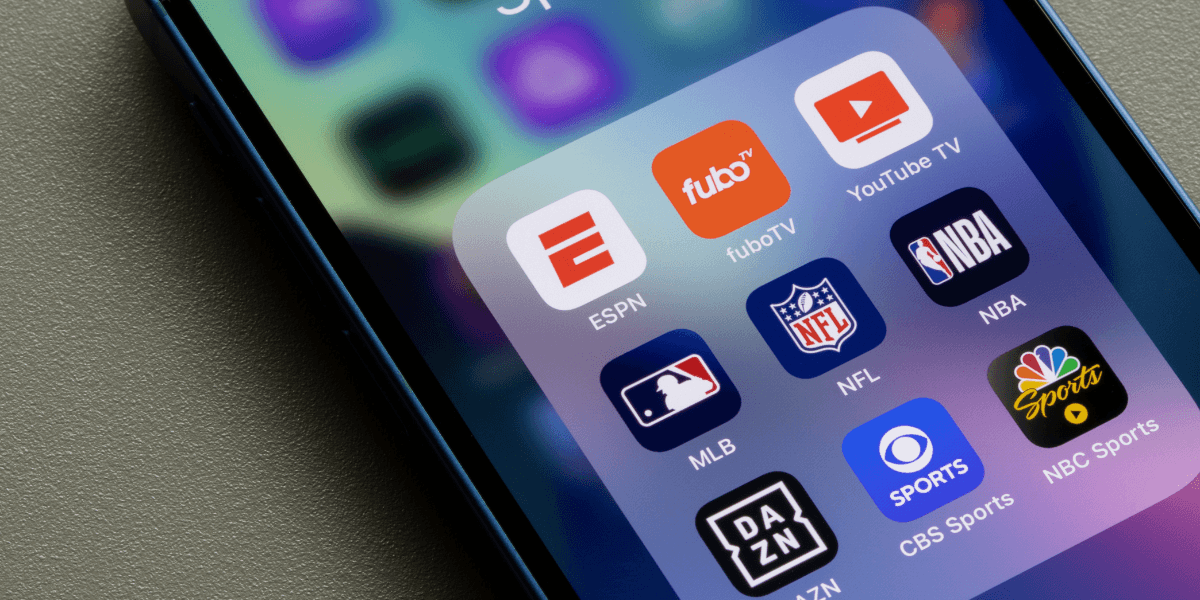
Main Street Sports Group, which ran the FanDuel Sports Network channels, shut down after the 2025-26 regular season, and the NBA told 13 affected teams to find new local deals. The league plans a national streaming hub for local games starting as early as 2027-28, but for this season, every market works differently.
Before you sign up for anything, look up your team’s specific arrangement. Below are the main models you will run into.
DAZN took over local streaming for 10 teams. The Cavaliers, Pacers, Grizzlies, Timberwolves, and Spurs signed exclusive deals, which means DAZN is the only place to stream their local games. Each of those teams costs $20 a month or $120 a season on DAZN’s standard plan, or $25 a month or $140 a season on the Ultimate plan, which adds multiview and more simultaneous streams. Each team also simulcasts a small package of games over the air for free, usually 15 games, with the Spurs offering 22.
The Cavaliers show the downside of this model. Awful Announcing ranked them the least accessible team to watch this season, since fans have no cable or satellite option and only 15 free over-the-air games outside of DAZN.
The Pistons, Hornets, and Magic use a hybrid approach that pairs DAZN streaming with free over-the-air broadcasts. The Pistons air on The Spot Detroit 20, the Hornets on WSOC Channel 9 and TV64, and the Magic on MagicTV 27 and WFTV 9. DAZN also hosts the Knicks’ MSG+ for $30 a month and the Nets’ YES Network for $20 a month, with a bundle of both for $35 a month.
The Celtics, Warriors, Kings, and 76ers still air on NBC Sports regional networks, and fans in those markets can stream local games through a Peacock add-on. The add-on costs $14.95 a month for the Celtics and Warriors, $17.95 for the Kings, and $24.95 for the 76ers. You pay that fee on top of a Peacock subscription, and the add-on works with any Peacock plan, including Select. Keep in mind that you still need Peacock Premium for NBC’s national games.
Several teams now air most or all of their local games for free on broadcast TV, which makes an antenna one of the best investments a cord-cutter can make this season. The Heat moved to WPLG Local 10 in Miami and stream for free on the LOCAL 10 Plus Platinum app. The Bucks air entirely on MY24 in Milwaukee, with a Bucks+ streaming option for $20 a month or $100 a season. The Hawks air on Atlanta News First and Peachtree Sports Network, and their in-market stream comes included with an Amazon Prime membership this year.
Not every broadcast deal is generous, though. The Thunder moved to the Thunder Gameday Network, but only 10 games air over the air, and most of the rest require cable, satellite, or the Thunder+ app at $20 a month or $109 a season.
Teams with established regional networks typically sell a direct streaming option. Lakers fans can stream Spectrum SportsNet+ for $20 a month or $200 a season, Rockets fans can get SCHN+ for $20 a month or $200 a year, and Nuggets fans can get Altitude+ for the same price. Bulls fans can stream CHSN+ for $20 a month, and Wizards fans can get Monumental+ for $20 a month or $180 a season. These apps only work inside each team’s home territory.
NBA League Pass is the best tool for following a team that plays somewhere else. The standard plan costs $16.99 a month or $109.99 for the season and lets you stream on one device at a time. League Pass Premium costs $24.99 a month or $159.99 for the season, removes commercials, and supports three streams at once. If you only care about one out-of-market team, Team Pass costs $13.99 a month. You can also add League Pass as a channel inside Prime Video.
Blackouts cause more frustration than anything else in NBA streaming, so it helps to know the rules before you pay. In the U.S., League Pass blacks out your local team or teams and every nationally televised game. The NBA uses your location to decide what counts as local.
Here is a common example. If you live in Detroit and follow the Lakers, League Pass will stream most Lakers games. When the Lakers play the Pistons, though, that game is blacked out because it airs on your local Pistons broadcast. When the Lakers play on ESPN, Peacock, or Prime Video, League Pass blacks that out too, because the national partner holds the rights.
Blacked-out games are not gone for good. The NBA makes nationally broadcast games available on demand in League Pass about three hours after they end, and locally televised games become available three days after the broadcast. That works fine for catching up, but it won’t help if you want to watch live.
The season-long price only makes sense if you plan to keep League Pass all season. Monthly billing for the roughly six-month regular season is slightly cheaper than the season pass, and it lets you cancel if your team falls out of contention.
If juggling apps sounds exhausting, a live TV streaming service can replace several subscriptions at once. These services feel most like cable, but they also cost the most.
YouTube TV‘s main plan costs $82.99 a month. Its Sports Plan costs $64.99 a month, or $54.99 a month for the first year for new customers, and it includes ABC, ESPN, NBC, NBCSN, and NBA TV. Because NBCSN carries Peacock’s exclusive Monday games, YouTube TV covers every national partner except Prime Video.
Hulu + Live TV costs about $100 a month after a September price increase and carries ABC, ESPN, NBC, and NBCSN. It also includes Disney+ and ESPN, which adds value if your household watches those services anyway. Fubo carries the same national channels in its base plan at about $89 a month, plus regional sports fees, and in a Sports plan at about $65 a month. Fubo and DirecTV also carry many local team channels, which makes them worth checking if your team sits on a regional network.
DirecTV’s MySports plan costs about $65 a month and carries ABC, ESPN, and NBC, but it does not include NBCSN, so you would miss Peacock’s Monday games. Sling’s Essentials plan includes ESPN for about $20 a month, which makes it a cheap way to get Wednesday games, although it won’t cover NBC or Peacock in most markets.
The trade-off is simple. A live TV service saves you from app-hopping and usually adds your local NBC and ABC stations, but none carry Prime Video’s games, and none include League Pass.
Every option in this guide depends on one thing cable never needed: a strong and reliable home internet connection. Live sports punish weak connections more than movies do, because a live stream can’t buffer far ahead. When your connection dips, the picture drops to blurry, low-resolution video or freezes entirely, usually at the worst possible moment.
YouTube TV recommends at least 13 Mbps to reliably stream HD video while other devices share your network, and 25 Mbps or more to watch in 4K. Fubo gives similar guidance, recommending 25 Mbps for 4K and noting that three devices streaming at 720p at the same time need a constant 21 Mbps or more.
Those numbers describe one stream at a time, and most households run a lot more than that. If two people want to watch different games in 4K while someone else plays an online video game or joins a video call, you can easily need 75 Mbps or more of steady download speed. That is why a plan with 100 Mbps or more gives most sports households comfortable headroom. If you rely on League Pass Premium or DAZN’s Ultimate plan for multiple streams or multiview, plan on the higher end.
Your advertised speed is a best-case number, and many connections slow down during evening hours when your neighbors are streaming too. Run a speed test during a Friday night Prime Video game to see what you get in real conditions.
Even a perfect connection won’t make streaming as fast as an antenna. During Super Bowl LX in February, Stats Perform found that antenna viewers watched about 19 seconds behind the action on the field, cable viewers about 38 seconds behind, and YouTube TV and Hulu + Live TV viewers about 53 seconds behind.
Most of that delay comes from how streaming services encode and deliver video, so upgrading your internet won’t erase it. A faster, more stable connection does keep your stream from falling even further behind when it rebuffers. If spoilers drive you crazy, turn off score alerts on your phone during games, and consider watching NBC and ABC games with an antenna.
If your stream freezes or turns fuzzy, your internet plan may be the weak link. Enter your zip code below to compare internet providers and plans available at your address, and find a connection fast enough to stream every NBA game this season without the lag.
Lower your internet bill
61% of people overpay for their internet.
Are you one of them?
Unlock exclusive offers in your area!
Call now
[tel]Enter zip code
Yes, you can watch some games for free. An antenna picks up NBC and ABC broadcasts, which include Coast 2 Coast Tuesday, Sunday Night Basketball, Saturday Primetime, Christmas Day, and the NBA Finals. Several teams also air local games over the air this season, and Heat fans can stream local games for free on the LOCAL 10 Plus Platinum app. You will still need paid services for ESPN, Peacock-exclusive, and Prime Video games.
League Pass blacks out your local team and all nationally televised games in the U.S., because local broadcasters and national partners hold exclusive rights to those games. If you live in your team’s market, you need your team’s local option instead, such as DAZN, a team app, or a free broadcast channel. National games air on Peacock, Prime Video, ESPN, or ABC. Blacked-out national games show up on demand in League Pass about three hours after they end.
YouTube TV recommends at least 13 Mbps for one reliable HD stream and 25 Mbps for one 4K stream. Most households should aim for 100 Mbps or more, since several people often stream, game, and work online at the same time. A wired Ethernet connection to your TV also helps prevent buffering during live games.
[1] NBA.com “NBA announces schedule for 2026-27 regular season"
[2] ESPN.com “NBA full schedule 2026-27: Games to watch, FAQ, rivalries and matchups"
[3] SportsMediaWatch.com “SMW FAQ: A complete guide to NBA local broadcasts in 2026-27"
[4] AwfulAnnouncing.com “The 2026-27 NBA local broadcast accessibility rankings"
[5] TVLine.com “Peacock Is Hiking Its Prices Again"
[6] iTechGuides.com “Is Peacock free in 2026?"
[7] NewscastStudio.com “ESPN announces streaming price hike as it marks its first anniversary"
[8] SportsMediaWatch.com “ESPN Unlimited sets first price increase"
[9] CBSSports.com “NBA League Pass promo code 2026: DraftKings promo code gives three free months"
[10] AmericanTV.com “NBA League Pass 2026-27 Plans and Prices"
[11] NBA.com “League Pass Blackouts"
[12] Google.com “Troubleshoot YouTube TV video playback issues"
[13] Fubo.tv “How fast does my internet connection need to be?"
[14] AwfulAnnouncing.com “Antenna, cable win Super Bowl latency battle as streamers lag behind"
Do you want to leave a review for AT&T Internet?
About the author

Infinity Sales Group, LLC