
Lower your internet bill
61% of people overpay for their internet.
Are you one of them?
Unlock exclusive offers in your area!
Call now
[tel]Enter zip code
Are you happy with your Internet service?

About the author
Virtual reality has changed dramatically since the first consumer VR headsets came out… and they just keep getting better. What started as a niche gaming technology has expanded into a mainstream platform for everything from immersive gaming experiences to virtual workspaces and live entertainment streaming. As VR headsets like the Meta Quest 3, PlayStation VR2, and Apple Vision Pro become more sophisticated, one critical factor determines whether your virtual experience is breathtaking or nauseating: your internet connection.
Finding the best internet for VR isn’t just about raw speed, though. While a typical Netflix stream might forgive the occasional buffering pause, VR demands a consistently stable connection with minimal latency to prevent motion sickness and maintain immersion, especially when participating in multi-user, remote experiences.
61% of people overpay for their internet.
Are you one of them?
Unlock exclusive offers in your area!
Call now
[tel]Enter zip code

What Are the Internet Requirements for Virtual Reality?
VR internet requirements differ significantly from standard internet use. Most VR applications require at minimum 50-100 Mbps download speeds, but the real story lies in three critical factors: latency, reliability, and data consumption.
Latency (or ping rate) measures how quickly your internet connection responds to commands. For VR, latency under 40 milliseconds is ideal [1]. Anything higher can create a noticeable lag between your head movements and what you see in the headset, leading to disorientation and motion sickness. The Federal Communications Commission (FCC) recognizes latency as a crucial metric for interactive applications, publishing quarterly broadband performance reports that track provider latency across the United States [2].
Reliability matters because VR cannot tolerate connection drops. Unlike pausing a video during a buffering event, losing connection mid-VR session can be jarring and potentially dangerous if you’re physically moving around your play space.
Data consumption becomes relevant when you’re downloading VR games, streaming VR content, or playing multiplayer VR games that constantly exchange data with remote servers.
The internet speed for VR depends on what you’re doing in virtual reality. Here’s a breakdown based on current industry standards:
Research from Nvidia’s cloud gaming division suggests that VR streaming at high quality requires approximately 50 Mbps per stream [3], but having overhead capacity prevents quality drops during network congestion.
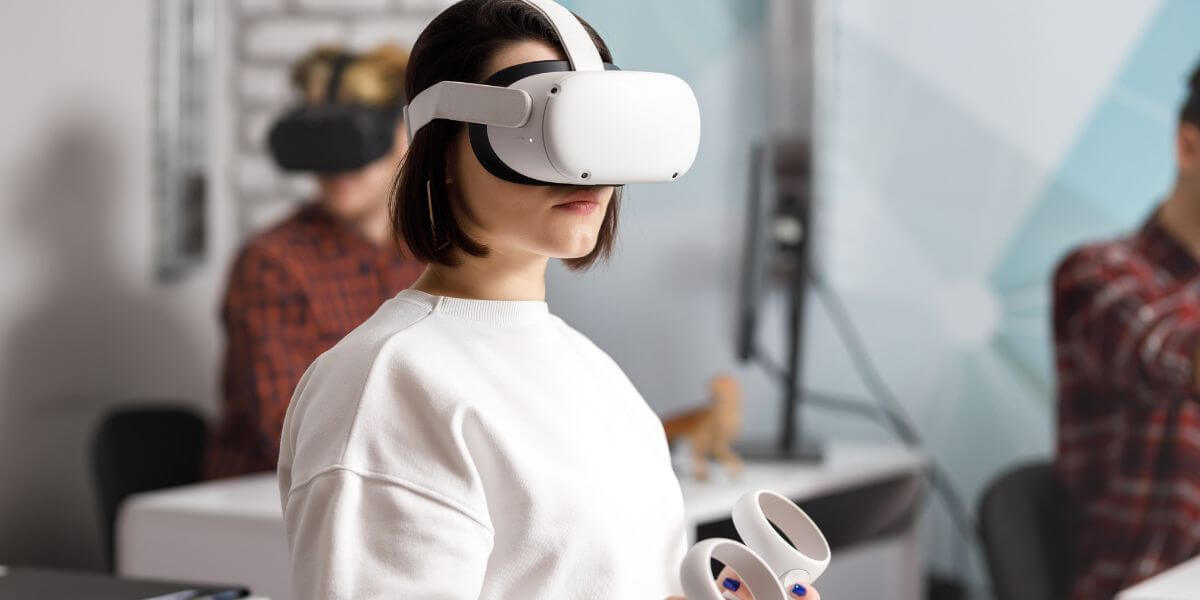
Why Is Low Latency Internet Critical for VR?
Low latency internet VR connections are non-negotiable for an enjoyable experience. When you turn your head in VR, your brain expects the visual field to update within less than 40 milliseconds. Delays beyond this threshold trigger what researchers call “vestibular-ocular mismatch"—essentially, your inner ear says you’ve moved, but your eyes haven’t caught up [4]. This mismatch causes VR motion sickness.
A 2021 study published in the Journal of the Society for Information Display found that latency above 28 milliseconds significantly increased reports of nausea, headaches, and dizziness among VR users, with even slight changes making major differences [5].
Beyond health concerns, latency affects gameplay performance. In competitive VR games like Contractors or Population: One, the difference between 15ms and 50ms latency can mean the difference between winning and losing a firefight.
Fiber internet VR connections deliver the optimal experience. Here’s how different connection types compare:
Finding the best internet for virtual reality in your location requires comparing availability and performance. The best internet in your area might differ from recommendations based on national performance. Start by checking which internet providers service your address. Use provider lookup tools to identify available options, then compare internet providers based on these VR-specific criteria:
Based on 2024 performance data and customer satisfaction surveys from the American Customer Satisfaction Index (ACSI) [7], these best internet providers consistently deliver strong VR experiences:

Do You Need Unlimited Data for VR?
The short answer: strongly recommended.
A single AAA VR game download can consume 50-100 GB. If you download just two major titles monthly and stream VR content regularly, you could easily exceed 500 GB. Factor in automatic game updates, multiplayer gaming data transfer, and VR video streaming, and monthly usage can approach or exceed 1 TB.
While many VR headsets operate wirelessly, your router’s connection to the internet should be wired when possible. Using a CAT 6 or higher Ethernet cable between your modem and router reduces latency compared to Wi-Fi connections.
For PC VR setups where you’re streaming from your computer to your headset wirelessly, ensure your PC has a wired Ethernet connection to your router. This configuration provides the most stable experience, with wireless only on the final hop between PC and headset.
For standalone Quest 3 games, 50-100 Mbps is sufficient. However, if you’re using Meta Quest Link to play PC VR games wirelessly, aim for 200-300 Mbps with latency under 20ms for the best experience. Game downloads require higher speeds temporarily—a 1 Gbps connection downloads a 50 GB game in about 7 minutes versus 90 minutes on 100 Mbps.
Yes, 5G home internet can work for VR gaming, though it’s not ideal. T-Mobile and Verizon’s 5G home services typically provide 100-300 Mbps with latency around 30-40ms. This meets minimum VR requirements, but you may experience occasional lag spikes during network congestion. If fiber or cable internet is available, those are better choices for consistent VR performance.
Actual gameplay uses surprisingly little data—typically 100-300 MB per hour for multiplayer VR games. However, game downloads are the real data consumers. Popular VR titles like Half-Life: Alyx (67 GB), Asgard’s Wrath 2 (120 GB), or Microsoft Flight Simulator VR (150+ GB) can quickly consume your monthly data allowance. VR video streaming uses 5-10 GB per hour at high quality settings.
Cable internet works perfectly well for VR in most cases. While fiber provides slightly lower latency (typically 10-15ms versus 20-25ms for cable), both fall well within acceptable ranges for VR. The bigger consideration is consistent speed during peak hours—fiber maintains more consistent speeds, but modern cable networks with DOCSIS 3.1 technology also perform reliably. Choose based on availability and price in your area; both technologies support excellent VR experiences.
[1] Reddit. “How high does latency have to get before you start feeling the difference?”
[2] FCC. “Measuring Fixed Broadband – Thirteenth Report.”
[3] Nvidia. “CloudXR Network Requirements.
[4] VEDA. “Vision Challenges with Vestibular Disorders.”
[6] Fiber Broadband Association. “Fiber Passes Over 50% of U.S. Households.”
Do you want to leave a review for AT&T Internet?
About the author

Infinity Sales Group, LLC
5900 Broken Sound Pkwy NW,Boca Raton, FL 33487