
Lower your internet bill
61% of people overpay for their internet.
Are you one of them?
Unlock exclusive offers in your area!
Call now
[tel]Enter zip code
 Use code: KALA & receive a $50 gift card with your order!
 Are you happy with your Internet service?

About the author
If you’re trying to decide between AT&T vs. T-Mobile home internet, you’re doing so at a great time. Both providers have expanded aggressively in recent years, and for many households, both show up as available options.
But this isn’t a straightforward internet comparison. AT&T offers several distinct products that vary wildly in quality, while T-Mobile brings a single, unified 5G fixed wireless offering. Knowing the differences is the key to making the right call, and to finding the best internet in your area.
61% of people overpay for their internet.
Are you one of them?
Unlock exclusive offers in your area!
Call now
[tel]Enter zip code
The core challenge with any AT&T Internet vs. T-Mobile comparison is that “AT&T internet" means different things depending on where you live. AT&T operates three distinct products: its fiber-optic network (the fastest and most reliable), Internet Air (a 5G/LTE fixed wireless service), and an older DSL/IPBB infrastructure it’s gradually retiring [1]. T-Mobile offers one product: 5G Home Internet, now packaged under the T-Mobile Rely Internet brand [2]. Which version of AT&T is available at your address changes this comparison entirely.
AT&T’s fiber network now reaches more than 30 million locations across the South, Midwest, and California, according to AT&T’s infrastructure reports [3]. T-Mobile’s 5G Home Internet has expanded to cover more than 40 million households nationwide, making it one of the fastest-growing home internet providers in the country [4].
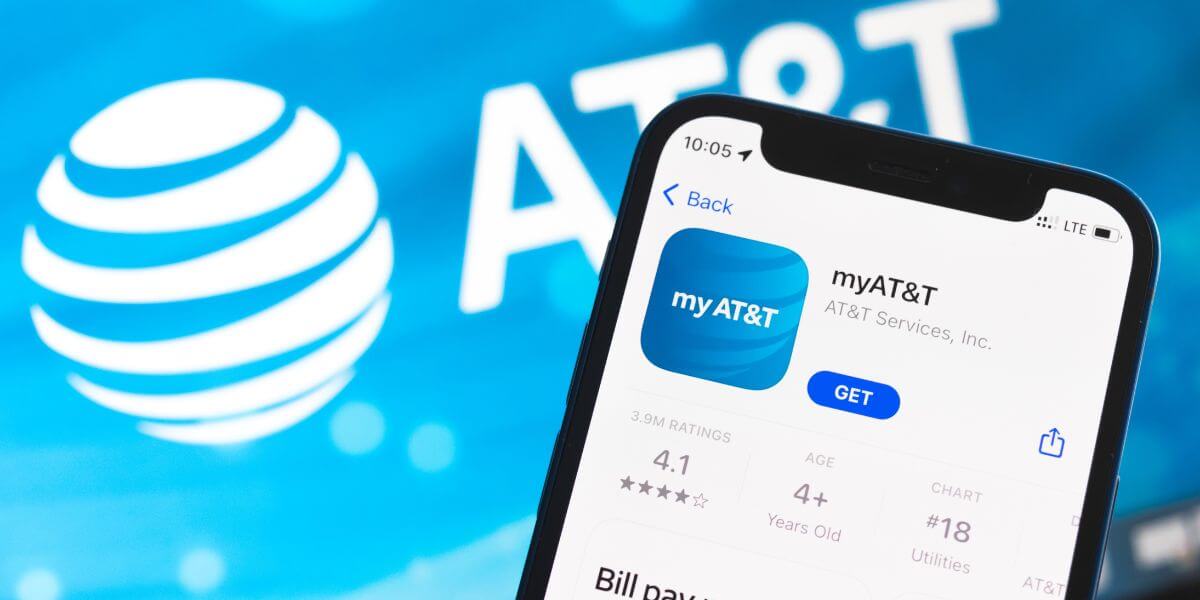
What Types of Internet Does Each Provider Offer?
AT&T fiber plans are the crown jewel of the company’s home internet lineup. Using dedicated fiber-optic lines, AT&T delivers symmetrical speeds (meaning upload speeds match download speeds) ranging from 300 Mbps to 5 Gbps. That symmetry matters for remote workers, content creators, and frequent video callers. The 1 Gig plan is the best value for most users.
Where fiber isn’t available, AT&T offers Internet Air, a fixed wireless product on its 5G and LTE network. Speeds typically land between 75–225 Mbps, which is fine for everyday browsing and streaming, but a step down from fiber in both speed and consistency.
T-Mobile 5G home internet operates on the company’s nationwide 5G network, with typical speeds between 100–300 Mbps. A dedicated T-Mobile 5G home internet review of real-world data from Ookla [5] shows T-Mobile consistently outperforming many cable competitors in fixed wireless performance. T-Mobile’s self-contained gateway doubles as a router and requires no technician visit.
When comparing AT&T fiber vs. T-Mobile 5G, fiber wins on raw speed, consistency, and low latency. But when the comparison is AT&T Internet Air vs. T-Mobile, the two are much more evenly matched… and T-Mobile often edges ahead on price and reliability.
Internet prices are often where decisions get made, and both internet providers have taken notably different approaches here. AT&T fiber pricing (as of April 2026):
AT&T fiber prices are straightforward and don’t include promotional periods that spike after year one. There are no data caps on fiber plans, and AT&T includes a gateway device at no additional charge. T-Mobile Rely Internet pricing (as of April 2026):
T-Mobile’s 5-year price lock guarantee ensures your rate won’t increase for five years, which a commitment AT&T doesn’t currently match. Both providers are contract-free, so canceling carries no early termination fee.
When you compare internet plans across both providers, T-Mobile wins on price predictability. AT&T fiber wins on performance per dollar, particularly if symmetrical upload speeds matter to your household.

How Do Setup and Installation Differ?
T-Mobile’s gateway arrives by mail, and most customers are up and running in about 15 minutes. No technician is required, and no appointment needs to be scheduled. AT&T fiber requires a professional installation, which can take several hours, though AT&T often waives the fee during promotional periods [6]. AT&T Internet Air, like T-Mobile, is self-install, so if that’s the product at your address, setup complexity is roughly equal.
Customer experience data generally favors T-Mobile for fixed wireless customers. According to the J.D. Power 2025 U.S. Residential ISP Study [7], AT&T ranks first in overall satisfaction among wired providers — largely driven by its fiber product. Among fixed wireless customers specifically, however, T-Mobile earns higher marks for simplicity, price satisfaction, and support. The American Customer Satisfaction Index (ACSI) similarly notes that fiber customers report fewer outages and faster issue resolution than those on fixed wireless, regardless of provider [8].

Which Provider Should You Choose?
The honest answer depends on what’s available at your address:
It depends on which AT&T product is available at your address. If AT&T fiber is available, it’s typically the better choice for speed, reliability, and symmetrical uploads. If AT&T only offers fixed wireless (Internet Air), T-Mobile 5G Home Internet is often a comparable or superior option, particularly given its lower pricing and 5-year price lock guarantee.
T-Mobile Rely Internet is T-Mobile’s branded home internet service, delivered via its 5G fixed wireless network. It competes most directly with AT&T Internet Air. Both offer typical speeds of 100–300 Mbps, but T-Mobile generally offers more competitive pricing and a price lock guarantee that AT&T doesn’t currently match.
AT&T fiber plans and T-Mobile 5G Home Internet both offer unlimited data. The exception is AT&T Internet Air, which carries a 350GB monthly cap on some plan tiers, and worth confirming before you sign up if you stream heavily or work from home.
In some markets, yes. AT&T fiber is concentrated in specific urban and suburban footprints, while T-Mobile’s 5G Home Internet has broader nationwide reach. Entering your zip code in a compare internet providers tool is the fastest way to see which services (and which tiers) are actually available at your address.
[1] AT&T. “AT&T Internet Plans.”
[2] T-Mobile. “Home Internet.”
[5] Ookla. “Speedtest Intelligence (2024).”
Do you want to leave a review for AT&T Internet?
About the author

Infinity Sales Group, LLC