















Lower your internet bill
61% of people overpay for their internet.
Are you one of them?
Unlock exclusive offers in your area!
Call now
[tel]Enter zip code
As of early 2026, 60% of households nationwide have access to fiber internet, with over 11.8 million new fiber locations added in 2025 alone [1]. That's a record-breaking pace of expansion, and it means more Americans than ever can upgrade to the fastest, most reliable internet connection available.
Working from home, streaming in 4K, and online gaming (Fortnite, anyone?) are all situations where fiber internet has the speed and consistency other connection types can't match. At CompareInternet.com, we help you compare internet providers side by side so you can find the best fiber internet plan for your household. Below, we break down everything you need to know about fiber internet: what it is, who offers it, what it costs, and how to pick the plan that fits your needs.
Fiber internet (also called fiber-optic internet) is a broadband connection that transmits data as pulses of light through ultra-thin strands of glass or plastic. Unlike copper-based technologies like cable and DSL, fiber-optic lines can carry enormous amounts of data over long distances without losing signal strength.
Fiber internet is faster, more consistent, and more reliable than cable, DSL, satellite, or fixed wireless internet. Fiber internet plans in 2026 commonly offer speeds ranging from 100 Mbps to 5000 Mbps (5 Gigs) or more, with some providers now rolling out 8 Gbps and 10 Gbps tiers. Ziply Fiber even offers a 50 Gig fiber plan!
Symmetrical speeds are one of the major fiber perks, which means your upload speed matches your download speed. This is an advantage for video conferencing, cloud backups, livestreaming, uploading large files, and smart home devices. With a cable internet plan advertised at "300 Mbps," you might only get 10–15 Mbps upload. A fiber internet plan at the same speed gives you the full 300 Mbps in both directions.
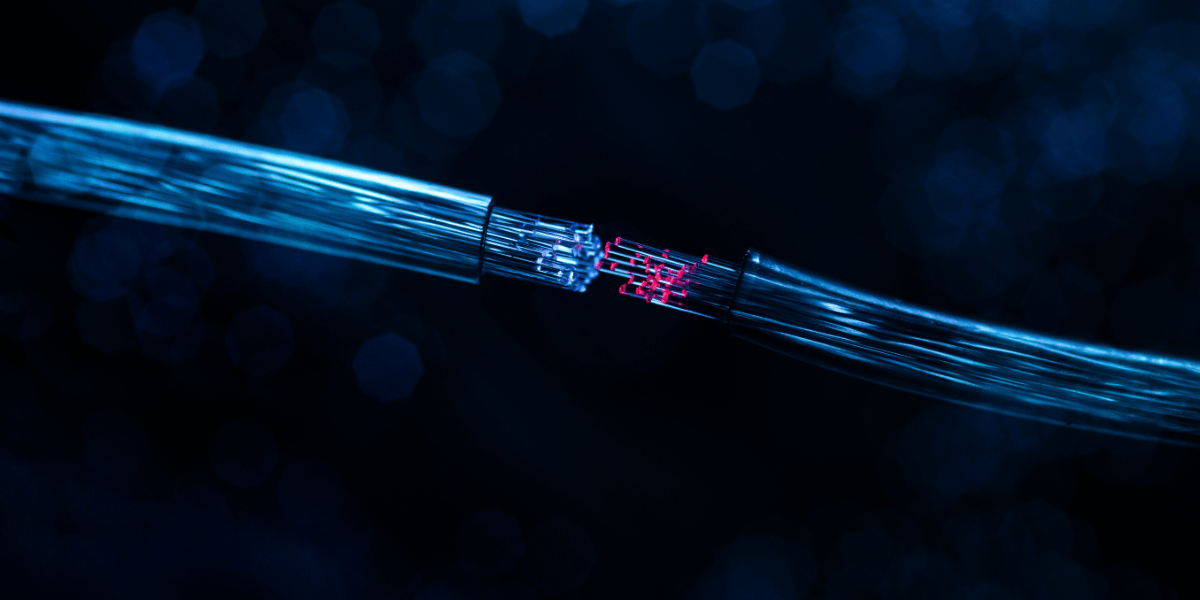
Fiber internet delivers the fastest residential internet speeds available. Data travels through fiber-optic cables at roughly 70% the speed of light, fast enough to circle the Earth five times in a single second [2, 3]. This means you can download an HD movie in seconds, stream 4K content on multiple screens, and experience zero lag during online gaming.
Cable internet has shared bandwidth with your neighbors, which causes slowdowns during peak hours (like 6 pm – 11 pm when everyone is home from work and school). Fiber, however, provides a dedicated connection to your home. Fiber-optic cables are also immune to electromagnetic interference from appliances, weather, and nearby electronics.
This is the single biggest advantage fiber has over every other type of internet connection. Cable and DSL connections are asymmetrical, meaning uploads are dramatically slower than downloads. For households with remote workers on video calls, creators uploading content, or anyone backing up files to the cloud, symmetrical fiber speeds are life-changing.
Fiber internet consistently delivers the lowest latency (ping) of any connection type, usually below 10 milliseconds. This makes fiber the top choice for competitive online gaming, real-time video conferencing, and VoIP phone calls.
Fiber-optic infrastructure has the bandwidth to support new technology like virtual reality (VR), augmented reality (AR), AI-powered applications, and the growing Internet of Things (IoT). As households connect more devices and bandwidth demands increase, fiber internet is built to scale.
One of the biggest surprises for people comparing internet providers in 2026: fiber internet plans are often cheaper than cable. Additionally, many fiber providers offer plans with no data caps, no annual contracts, and free equipment. When you factor in the superior speed and reliability, fiber delivers significantly more value per dollar than cable or DSL.
Here are the top fiber internet providers to compare in 2026.
AT&T
Plans: 6
Starting at: $55/month for 100 Mbps
Top Speed: 5000 Mbps
AT&T Fiber is the largest fiber internet provider in the United States and just got bigger. Following its acquisition of Lumen's consumer fiber business in February 2026, AT&T now serves fiber customers across 32 states with plans to reach 40 million fiber locations by the end of 2026 and 60 million by 2030. AT&T also won Ookla's first-ever "Best Home Internet" award and was named America's Fastest Home Internet for the fourth consecutive time.
AT&T Fiber plans come with no data caps, no annual contracts, and no equipment fees. Their best plan is the AT&T FIBER - INTERNET 5000 with speeds up to 5000 Mbps. Prices range from $55 to $155/month. Bundling with AT&T wireless can unlock additional savings. If AT&T Fiber is available at your address, it's one of the strongest choices you can make.
Kinetic
Plans: 4
Starting at: $39.99/month for 100 Mbps
Top Speed: 2000 Mbps
Kinetic has been making major investments to bring fiber internet to underserved and rural communities. Kinetic aims to make fiber available to customers in areas that have historically lacked high-speed internet options. Kinetic offers no data caps and competitive promotional pricing, though prices increase after the first year. An equipment rental fee applies.
Plans: 5
Starting at: $29.99/month for 200 Mbps
Top Speed: 8000 Mbps
Brightspeed is one of the newest fiber internet providers in the U.S., formed through the acquisition of a large copper network spanning 20 states [5]. The company's mission is straightforward: transform aging copper infrastructure into modern fiber, starting with the communities that need it most. Brightspeed offers simple, transparent pricing with no hidden fees, no data caps, and no equipment charges.
Plans: 5
Starting at: $30/month for 200 Mbps
Top Speed: 8000 Mbps
Quantum Fiber is known for offering some of the lowest fiber internet prices on the market. While speeds may not reach those of multi-gigabit competitors, they are symmetrical and more than sufficient for the vast majority of households. For budget-conscious shoppers who want fiber performance without a premium price tag, Quantum Fiber is worth a look.
Plans: 4
Starting at: $34.99/month for 300 Mbps
Top Speed: 2000 Mbps
Verizon's fiber story changed dramatically in January 2026 when it completed its $20 billion acquisition of Frontier Communications [4]. The combined company now serves nearly 30 million fiber locations across 31 states and Washington, D.C., making Verizon one of the largest fiber internet providers in the country. Frontier customers are being transitioned to the "Frontier, a Verizon Company" brand and given access to new bundle offers.
Verizon Fios plans have no data caps and no annual contracts. Their best plan delivers up to 2000 Mbps, with prices ranging from $34.99 to $94.99/month. Existing Verizon mobile customers can bundle mobile and home internet for significant savings.
Plans: 6
Starting at: $20/month for 100 Mbps
Top Speed: 10000 Mbps
Ziply Fiber offers some of the most aggressive promotional pricing in the fiber market. Based in the Pacific Northwest, Ziply serves Washington, Oregon, Idaho, and Montana. No data caps. No annual contracts. And Ziply is committed to expanding fiber access in rural communities throughout its service region.
Plans: 4
Starting at: $30/month for 100 Mbps
Top Speed: 2000 Mbps
Fidium Fiber launched in late 2021 and has been steadily expanding across 8 states, including California, Texas, Illinois, and several New England states. Prices are competitive across all tiers, with a Wi-Fi 6 gateway included at no extra cost. Fidium requires no contracts and imposes no data caps.
Earthlink
Plans: 6
Starting at: $39.95/month for 100 Mbps
Top Speed: 5000 Mbps
EarthLink is a third-party internet provider, meaning it resells fiber internet service from other major networks (like AT&T Fiber). Prices are slightly higher as a result, but EarthLink has built its brand on premium customer support. If responsive, knowledgeable customer service is your top priority, EarthLink is worth the modest premium.
Plans: 3
Starting at: $60/month for 500 Mbps
Top Speed: 2000 Mbps
MetroNet is a 100% fiber-optic internet provider serving 16 states, primarily in the Midwest and Southeast. The company is known for reliable service, strong customer support, and straightforward pricing with no data caps, no contracts, and equipment included in the monthly fee.
Not all fiber internet providers are created equal. Here are the five factors our team recommends weighing when you compare internet providers in your area:
Fiber internet availability varies block by block, not just by city. Enter your zip code in the search tool at the top of this page to see exactly which fiber internet providers serve your address.
Think about how many people and devices use your internet simultaneously and what they're doing. A household of 1–2 people doing basic browsing and streaming can thrive on 300 Mbps. A home with 4+ people, multiple 4K streams, remote workers on video calls, and online gamers should look at 1 Gbps or higher. Fiber internet speeds range from 100 Mbps to 10,000 Mbps, so there's a plan for every household.
The advertised monthly price is only part of the picture. Check for equipment rental fees, installation charges, price increases after a promotional period, early termination fees, and data caps. However, many of the best fiber internet providers in 2026 have eliminated most extra costs.
Speed and price matter, but so does the experience of actually being a customer. Check provider reviews and satisfaction ratings. Providers that rank high in customer service can save you hours of frustration when you need technical support or billing help. Our provider reviews pages let you read real customer feedback.
If you already have a mobile plan with AT&T or Verizon, bundling home fiber internet with your wireless service can save $10–$25 per month or more. These convergence bundles are a major trend in 2026 and can significantly reduce your total connectivity costs.
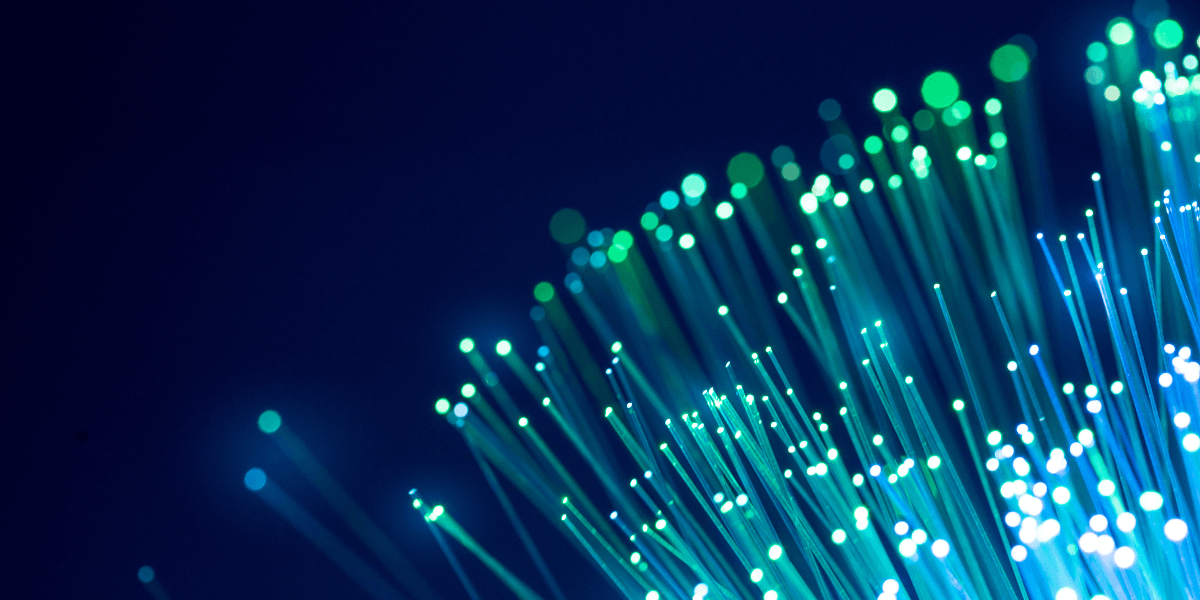
Fiber internet works by converting data into pulses of light and transmitting them through fiber-optic cables, thin strands of glass roughly the diameter of a human hair. Here's the simplified process:
When you click a link, send an email, or start a stream, your device creates data packets, which are small units of information formatted for network transmission. An optical transmitter at the ISP's hub converts those data packets into light signals using lasers or LEDs. The light travels through fiber-optic cables to the Optical Network Terminal (ONT) at your home, where the signal is converted back into electrical data your router and devices can use.
Because light travels through fiber-optic cables at roughly 70% the speed of light in a vacuum, fiber internet achieves lower latency and higher throughput than any copper-based technology. Fiber-optic cables are also unaffected by electromagnetic interference, which is why fiber connections remain stable and fast even during peak usage hours or severe weather.
If you've signed up for a fiber internet plan, here's what the installation process typically looks like:
Site Survey: A technician visits your home to assess the best route for running the fiber-optic line. This may involve checking utility poles, underground conduit, or exterior walls.
Fiber Line Installation: The fiber cable is run from the nearest connection point to your home, either aerially (on utility poles) or buried underground.
ONT Placement: An Optical Network Terminal (ONT) (a small box that converts the fiber-optic signal into a standard internet connection) is installed inside or outside your home.
Router Setup and Testing: The technician connects your router to the ONT, configures your Wi-Fi network, and runs speed tests to confirm your connection is performing as expected.
Most fiber internet installations are completed in 1–3 hours. Many providers offer free professional installation as part of new customer promotions.
Understanding how fiber compares to other internet types helps you appreciate why it's the preferred choice whenever it's available.
Fiber vs. Cable Internet: Cable internet shares bandwidth across a neighborhood node, so speeds slow down during peak evening hours (6 pm – 11 pm). Fiber provides a dedicated line to each home. Cable speeds top out at 2000 Mbps, while fiber reaches up to 10,000 Mbps, and fiber uploads match downloads, while cable uploads lag far behind.
Fiber vs. DSL Internet: DSL runs on aging copper phone lines and maxes out around 100 Mbps (often much less). DSL speeds also degrade with distance from the provider's hub. Fiber offers speeds 10–50x faster with no distance-related degradation.
Fiber vs. Satellite Internet: Satellite internet is available almost everywhere, but comes with high latency (often 20–40+ milliseconds) and typically imposes data caps. Fiber has ultra-low latency (under 10 ms), and most providers offer unlimited data. Satellite speeds top out around 350 Mbps, a fraction of what fiber delivers.
Fiber vs. Fixed Wireless (5G Home Internet): 5G home internet from providers like T-Mobile and Verizon is a solid option where fiber isn't available, but speeds are variable and depend on tower congestion. Fiber provides more consistent speeds and true symmetrical bandwidth.
Fiber internet availability has expanded rapidly. Currently, 60% of households have access to fiber nationally.
Several factors are driving this expansion:
Massive private investment: ISPs and private equity firms have poured over $80 billion into fiber infrastructure over the past five years [6].
Federal BEAD funding: The Broadband Equity, Access, and Deployment (BEAD) program is now entering its deployment phase in 2026, with most state grants prioritizing fiber-to-the-home buildouts in rural and underserved communities.
Major carrier acquisitions: Verizon's $20 billion purchase of Frontier and AT&T's $5.75 billion acquisition of Lumen are expanding fiber availability in dozens of new metro areas.
Growing competition: About 16% of fiber-served homes now have access to two or more fiber providers, up from 13% in 2024 [1]. More competition means better prices and service for consumers.
Industry projections suggest fiber could reach 80% of U.S. households by 2028. Enter your zip code in the search tool at the top of this page to check your specific address.
Fiber internet plans in 2026 range in price depending on speed. Entry-level plans (300 Mbps–1 Gbps) generally cost $30–$60/month, while multi-gig plans (2–8 Gbps) range from $70–$155/month. For the most accurate pricing, enter your zip code at the top of this page to see real plans available at your address.
Yes, in nearly every measurable way. Fiber internet provides faster speeds (up to 10,000 Mbps vs. cable's 2,000 Mbps), symmetrical uploads, lower latency, and more reliable performance. Fiber is also increasingly price-competitive with cable. The only advantage cable has is wider availability, but that gap is closing rapidly.
The fastest way to check is to enter your zip code in the search tool at the top of this page. We'll show you every fiber internet provider available at your address, along with their current plans and pricing. You can also call our team at 1-833-933-2468 for personalized help comparing internet providers.
Fiber internet requires an Optical Network Terminal (ONT), which your provider will typically supply. Whether you can use your own router depends on the provider; some include a gateway at no extra charge, while others allow you to bring your own compatible router. Check with your provider for specifics.
Yes. Fiber-optic cables transmit data as light, making them extremely difficult to tap or intercept physically. Copper cables (used by cable and DSL) are far easier to access. While no internet connection is immune to all security threats, fiber provides a more secure physical layer.
If fiber hasn't reached your address, don't worry, it's expanding fast. In the meantime, we can help you find the best available alternative. Cable speeds reach up to 2,000 Mbps, and satellite up to 350 Mbps. Enter your zip code to compare internet providers and plans near you, and check back regularly as fiber buildouts continue.
For a single user doing basic browsing, email, and standard-definition streaming, 100–300 Mbps is plenty. A household of 2–4 with HD/4K streaming, remote work, and smart devices should target 300 Mbps to 1 Gbps. Large households (5+) with heavy usage, gaming, and content creation may benefit from 1–2 Gbps or higher. Fiber's symmetrical speeds mean your upload performance will match your download speed, which matters for video calls and cloud uploads.
Fiber internet has moved from a niche luxury to a mainstream essential, and 2026 is the best time to make the switch. With fiber becoming more accessible, record expansion driven by billions in public and private investment, there's never been a better combination of speed, reliability, and value.
At CompareInternet.com, we make it easy to compare internet providers, explore fiber internet plans, and find exclusive deals in your area. Enter your zip code at the top of the page to discover which fiber internet providers serve your address and start saving today.
[1] Lightreading.com. "Broadband Fiber Deployment"
[2] Wired.com. "Internet at The Speed of Light"
[3] Grc.nasa.gov. "How Fast Is The Speed"
[4] Verizon.com. "Verizon and Frontier Regulatory Approval"
[5] Brightspeed.com. "Brightspeed Launches Operations and Begins Large-Scale Fiber Network Deployment"

Infinity Sales Group, LLC
5900 Broken Sound Pkwy NW,Boca Raton, FL 33487