
Lower your internet bill
61% of people overpay for their internet.
Are you one of them?
Unlock exclusive offers in your area!
Call now
[tel]Enter zip code
Are you happy with your Internet service?

About the author
Are you trying to figure out how to set up your internet? If you’re moving into a new place, just switching providers, or upgrading your equipment, self-installing your internet connection can save you both time and money on technician fees.
We’re walking you through everything from unboxing to successful streaming below.
61% of people overpay for their internet.
Are you one of them?
Unlock exclusive offers in your area!
Call now
[tel]Enter zip code
Before diving into the installation process, gather the essential equipment and information you’ll need:
Most internet providers send self-installation kits that include everything you need. Make sure to review any setup instructions or activation codes included with your equipment before beginning.
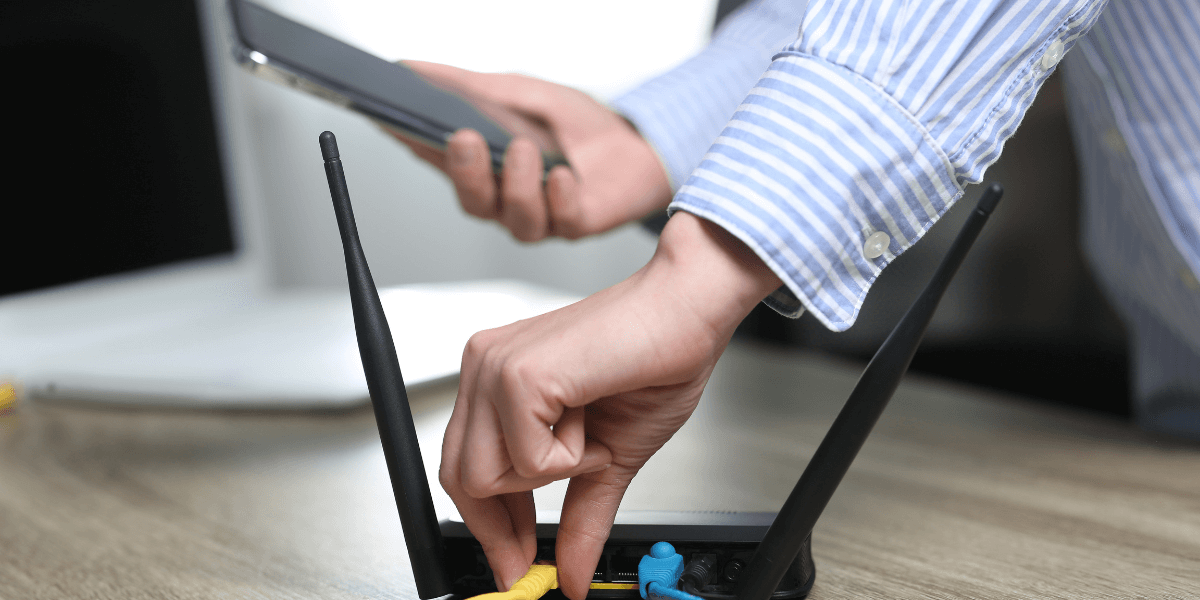
Setup by connection type
Different types of internet connections require slightly different setup processes. Here’s what you need to know:
Cable Internet: Uses a coaxial cable that connects to a cable outlet in your wall, similar to cable TV. This is one of the most common connection types for home internet.
DSL Internet: Connects through your home’s phone line using a special filter and phone jack. DSL is an older technology, but it is still widely available in many areas.
Fiber Internet: Requires a fiber optic cable and often an Optical Network Terminal (ONT) installed by the provider. Fiber offers the fastest speeds but isn’t available everywhere yet.
Fixed Wireless: Less common for home use, but it connects through a receiver that communicates with nearby transmission towers.
Knowing your connection type helps you identify the correct ports and equipment you’ll be working with during installation.
Start by locating the appropriate wall outlet for your internet type. For cable internet, look for a coaxial outlet (the same type used for cable TV). For DSL, you’ll need a phone jack. If you have fiber optic internet, your provider likely installed an ONT box on an exterior or interior wall.
If you can’t find the outlet or aren’t sure which one to use, check any documentation from your ISP or look for outlets in common areas like living rooms, home offices, or utility closets.
Once you’ve found the correct outlet, connect your modem:
Your modem’s indicator lights will help you track the connection process. Look for lights labeled “Power," “Online," or “Internet" to turn solid (not blinking) once the connection is established.
Many providers require you to activate your service before you can connect to the internet. There are typically two activation methods:
Online Activation: Visit your provider’s activation website using a device connected to your modem via Ethernet cable. Follow the prompts to register your equipment and activate service.
Phone Activation: Call your provider’s activation number with your account information and equipment serial numbers ready. A representative will activate your service remotely.
Some newer modems activate automatically when you plug them in and turn them on. Check your installation guide to see which method your provider uses.
If your modem doesn’t have built-in Wi-Fi capabilities, you’ll need to connect a separate router:
Many modern gateway devices combine the modem and router into a single unit, eliminating this step entirely.
Now it’s time to set up your wireless network:
For security purposes, immediately change both your network name and password to something unique and memorable. Create a strong password using a mix of letters, numbers, and symbols.
Router placement significantly impacts your Wi-Fi signal strength and coverage. For the best performance:
If you have a larger home or notice dead spots, consider investing in Wi-Fi extenders or a mesh network system to improve coverage.
After setup is complete, verify that your internet is working properly:
If your speeds are significantly lower than expected, try the troubleshooting tips in the next section.
Troubleshooting setup problems
Even with careful installation, you might encounter some hiccups. Here are solutions to common problems:
No Internet Connection: First, check that all cables are securely connected and that both your modem and router are powered on. Try unplugging both devices, waiting 30 seconds, then plugging the modem back in first, followed by the router after another minute.
Slow Speeds: Restart your modem and router. Move your router to a better location. Check for interference from other devices. Consider upgrading your equipment if it’s more than 3-5 years old.
Can’t Connect to Wi-Fi: Verify you’re using the correct password. Move closer to the router. Restart your device’s Wi-Fi connection. Update your device’s network drivers or operating system.
Modem Lights Not Solid: Give your modem up to 10 minutes to fully boot up and establish a connection. If lights remain blinking or off, there may be a service issue—contact your provider.
Forgotten Router Password: Most routers have a reset button that you can press and hold for 10-15 seconds to restore factory settings. You’ll need to set up your network from scratch again.
While most internet installations are straightforward, some situations call for professional assistance:
Don’t hesitate to contact your internet service provider’s technical support if you’re stuck. Many offer free troubleshooting assistance even for self-installed services.
Now that you know how to set up your internet connection, the next step is choosing the right provider and plan for your home. Not all internet providers are created equal, and the options available to you depend on your location, budget, and installation preferences.
Our comparison tool shows you:
Ready to get connected? Enter your zip code in our search tool below to instantly see all internet providers available at your address.
61% of people overpay for their internet.
Are you one of them?
Unlock exclusive offers in your area!
Call now
[tel]Enter zip code
How long does it take to self-install internet?
Most people complete self-installation in 30-60 minutes. The process includes connecting your modem to the wall outlet, activating your service, setting up your router, and configuring your Wi-Fi network. Cable and DSL installations are typically faster, while fiber optic setups may take slightly longer depending on your equipment.
Do I need to buy my own modem and router?
Not necessarily. Most internet providers offer equipment rental for $10-15 per month, which includes technical support and free replacements if equipment fails. However, purchasing your own equipment can save you money long-term (typically paying for itself within 1-2 years) and often provides better performance. Just make sure any equipment you buy is compatible with your provider’s network.
What internet speed do I need for my household?
It depends on your usage and the number of devices. For basic browsing and email, 25-50 Mbps is sufficient. Streaming HD video requires 25-50 Mbps per device. For households with 3-5 people streaming, gaming, and video conferencing simultaneously, aim for 200-500 Mbps. Remote workers and heavy gamers should consider 500 Mbps or higher for optimal performance.
[1] Usatoday.com. “How to Set up New Home Internet"
[2] Move.org. “Set Up Internet"
[3] Edu.gcfglobal.org. “Internet Basics: Set up a wifi network."
Do you want to leave a review for AT&T Internet?
About the author

Infinity Sales Group, LLC
5900 Broken Sound Pkwy NW,Boca Raton, FL 33487