



















Lower your internet bill
61% of people overpay for their internet.
Are you one of them?
Unlock exclusive offers in your area!
Call now
[tel]Enter zip code
DSL internet has been a reliable broadband option for millions of Americans for more than two decades. But in 2026, DSL is at a turning point. Major providers are actively retiring their copper networks in favor of fiber and wireless technologies, and AT&T (once one of the largest DSL providers) has stopped selling new DSL service entirely and received FCC approval to begin decommissioning copper facilities in roughly 10% of its footprint starting in mid-2026.
That said, DSL isn't dead yet. Millions of Americans still rely on DSL as their internet connection, mostly in rural areas that don't have access to cable or fiber. Providers like CenturyLink, Brightspeed, Kinetic, and EarthLink offer DSL internet plans. DSL still delivers a stable, affordable wired connection that beats dial-up, and it can sometimes outperform some satellite options.
DSL internet speeds range from 1 Mbps to 100 Mbps, with plans generally ranging from $30-60 per month. At CompareInternet.com, we did the hard work of researching all internet providers (DSL, fiber, cable, satellite, and fixed wireless) so you can find the best internet plan for your location and budget. Below, we cover everything you need to know about DSL internet in 2026, including who still offers it, how it works, what it costs, and whether you should consider upgrading to a faster alternative.
DSL (Digital Subscriber Line) is an internet connection that transmits data over the existing copper telephone lines in your home. DSL uses a different frequency range than voice calls, which means you can use the internet and make phone calls at the same time, a significant improvement over the dial-up internet it replaced in the late 1990s.
Some providers market upgraded DSL service under the name IPBB (Internet Protocol Broadband), which blends copper telephone lines with fiber-optic segments in the network to deliver somewhat faster and more reliable performance than traditional DSL. IPBB is not the same as all-fiber internet (the final connection to your home is still copper), but it can offer meaningful speed improvements.
DSL speeds can vary depending on a few factors: your distance from the provider's central office, the quality of your copper wiring, and the provider's network infrastructure. Download speeds can range from below 5 Mbps on older networks to 100 Mbps on the fastest connections. Upload speeds are typically much slower, commonly 1–10 Mbps. Plans generally cost between $30 and $60 per month.
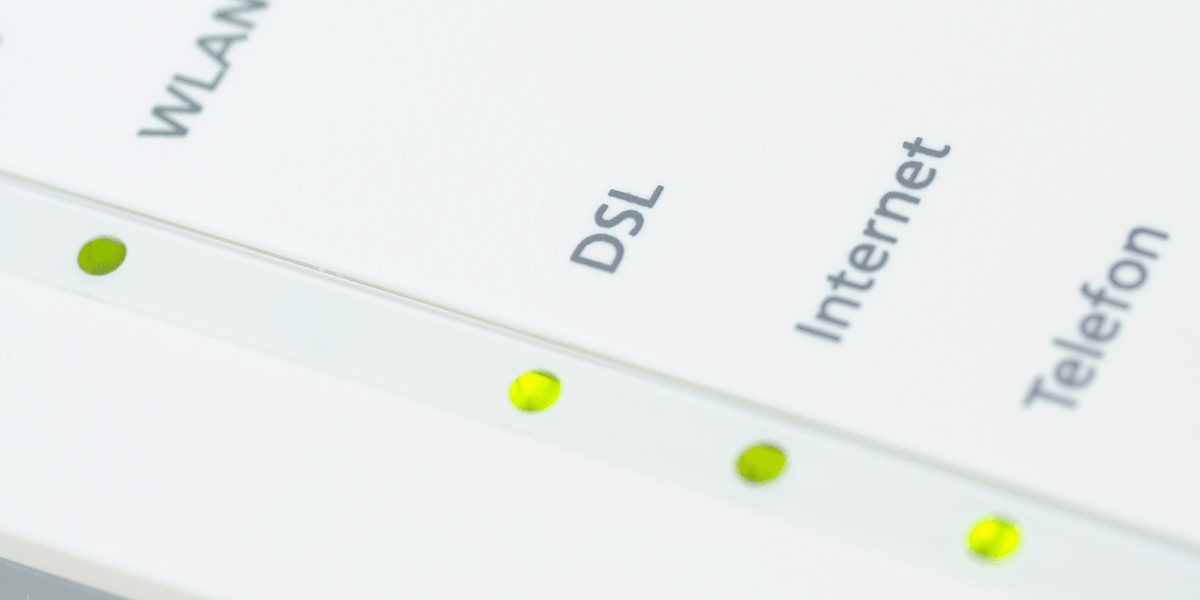
DSL reaches many areas that cable and fiber don't, particularly in smaller towns and rural communities. Because it runs on existing telephone infrastructure, DSL has historically been one of the most geographically accessible forms of wired internet in the U.S.
DSL provides a dedicated line to your home. You won't experience the peak-hour slowdowns caused by shared neighborhood bandwidth that cable users sometimes face.
The majority of DSL internet providers (including CenturyLink, Brightspeed, and Kinetic) don't impose data caps. You can use as much data as you want without worrying about overage charges or throttling.
DSL plans are typically priced competitively, often between $30 and $60 per month. Many providers offer price-lock guarantees with no annual contracts.
DSL uses your existing phone jack, so installation is straightforward. You can usually self-install in under 30 minutes. No special wiring or equipment is needed in most homes.
This is DSL's fundamental limitation. While some connections can reach 100 Mbps, many DSL customers get speeds in the 5–40 Mbps range, far below what cable (2000 Mbps) and fiber (10,000 Mbps) can deliver.
The farther your home is from the provider's central office or hub, the slower your DSL connection will be. Customers within a mile or two generally get the best performance; those farther out may experience significantly reduced speeds.
DSL upload speeds commonly range from 1–10 Mbps, which can make video conferencing, cloud backups, and large file uploads feel impossible.
Major providers are actively retiring copper networks. AT&T has stopped selling new DSL service. CenturyLink and other carriers are migrating customers to fiber where available. DSL's long-term viability is limited, which is important to consider before committing to a provider.
DSL speed depends heavily on local infrastructure, home wiring quality, and distance from the hub. Two neighbors on the same street can have very different DSL speeds. Providers typically offer you the fastest speed your line can support rather than letting you choose from tiered speed packages.
The DSL provider landscape is shrinking as the industry transitions to fiber and wireless. However, several providers still actively offer DSL internet plans, and for customers in their coverage areas, these remain viable options.
Plans: 5
Starting at: $29.99/month for 200 Mbps
Brightspeed took over a large copper network spanning 20 states from Lumen Technologies (CenturyLink's parent) in late 2022. The company's long-term mission is to transform that copper infrastructure into fiber, but in the meantime, many Brightspeed customers receive DSL service.
Brightspeed offers simple, transparent pricing with no data caps, no required contracts, and no hidden fees. DSL speeds vary by location, but the company has been actively investing in network improvements. If you're currently a Brightspeed DSL customer, it's worth checking periodically to see whether fiber has become available at your address, as the company is building aggressively.
Plans: 3
Starting at: $50/month for 100 Mbps
CenturyLink is one of the largest remaining DSL providers, serving a mix of DSL and fiber internet. CenturyLink's DSL plans offer no data caps and no annual contracts, so you pay month-to-month and can cancel anytime. Pricing is straightforward: you generally pay the same rate regardless of the speed your line supports.
If fiber is available at your address, CenturyLink's fiber plans are a significant upgrade over DSL in both speed and value. But for customers who can only get DSL, CenturyLink remains a solid choice with reliable service, unlimited data, and no-contract flexibility.
Plans: 6
Starting at: $39.95/month for 100 Mbps
EarthLink is a third-party internet provider that resells service from other major carriers like AT&T, Frontier, CenturyLink, and Verizon. This gives EarthLink wide availability across the continental U.S., but prices are typically higher than going directly to the underlying provider.
Plans: 1 DSL plan
Starting at: $24.99 per month for up to 100 Mbps
Kinetic serves 18 states, primarily in the eastern, central, and southern United States, with a heavy presence in rural areas. Kinetic offers both DSL and fiber internet, and the company is investing billions to expand fiber to rural America. But for the millions of Kinetic customers who are still on DSL, the service remains reliable and contract-free with no data caps.
Kinetic DSL users generally report good customer service satisfaction. If you're in Kinetic's coverage area and fiber hasn't reached you yet, DSL remains a reasonable interim option.
If DSL is your only wired internet option, here's how to make the best choice:
DSL speeds vary dramatically by location. The advertised "up to" speed may not reflect what you'll actually get. Enter your zip code in the search tool at the top of this page to see available plans and estimated speeds. You should also ask your neighbors about their DSL performance or check community forums.
Before committing to DSL, make sure you're not overlooking a better option. Fiber buildouts, 5G home internet, and cable expansions are adding new options to previously underserved areas every month. Enter your zip code above to compare internet providers of all types.
Most DSL providers in 2026 offer month-to-month service with no data caps. This is important because DSL's future is uncertain as copper networks are retired. A no-contract plan gives you the flexibility to switch to fiber, cable, or 5G the moment a better option becomes available.
Most providers charge a flat rate regardless of the speed your line supports. This means you might pay $50/month for 15 Mbps or $50/month for 75 Mbps; it just depends on your location. The value proposition varies widely as a result.
If you're signing up for DSL in 2026, understand that your provider may eventually migrate you to fiber or wireless. This is generally a good thing because fiber and 5G offer better performance. Ask your provider about their fiber buildout timeline in your area so you know what to expect.
DSL internet transmits data through the copper telephone wires already installed in your home. It works by using frequency ranges that don't interfere with standard voice calls, allowing you to use the internet and your landline phone simultaneously.
Your DSL modem connects to a phone jack in your home. The modem converts digital data into signals that travel over the copper telephone line to your provider's central office or local hub (called a DSLAM, Digital Subscriber Line Access Multiplexer). From there, the signal is routed onto the provider's broader network (which typically includes fiber-optic backbone connections) and out to the wider internet.
The critical factor in DSL performance is distance. Copper telephone lines lose signal strength over distance, which is why DSL speeds degrade the farther your home is from the provider's hub. Homes within a mile or two generally get the best speeds; those 3+ miles away may experience significantly reduced performance.
Fiber is faster, by a lot. Fiber offers speeds up to 10,000 Mbps with symmetrical uploads, sub-10 ms latency, and no distance-related degradation. DSL maxes out at 100 Mbps with upload speeds of just 1–10 Mbps. Fiber also tends to cost less per Mbps. If fiber is available at your address, there's no reason to choose DSL.
Cable delivers faster download speeds (up to 2000 Mbps) and is available in most urban and suburban areas. Cable's upload speeds (5–50 Mbps) are also better than DSL's. The only scenario where DSL might make sense over cable is if your DSL connection is fast and cable isn't available at your address.
This is where the comparison gets nuanced. Starlink offers download speeds of 50–200+ Mbps with a latency of 25–60 ms, faster and more responsive than most DSL connections. GEO satellite (Viasat) offers speeds up to 150 Mbps but with much higher latency (600+ ms). If your DSL connection delivers 25+ Mbps with good reliability, it may outperform GEO satellite for interactive use. But Starlink is likely a better option than slow DSL.
Fixed wireless 5G from T-Mobile, Verizon, and AT&T delivers 100–300+ Mbps with low latency (25–50 ms), no contracts, unlimited data, and free equipment. If 5G home internet is available at your address, it's almost certainly a better choice than DSL. Many providers are positioning 5G as the direct replacement for DSL customers being migrated off copper networks.
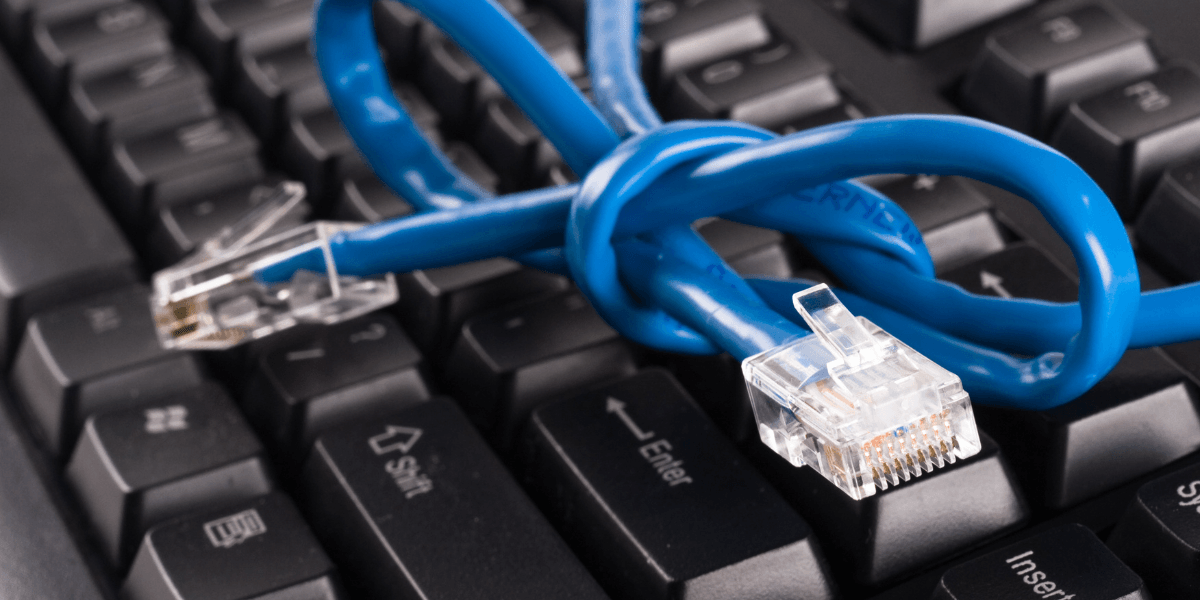
DSL is one of the simplest internet connections to install. If you choose self-installation, your provider will send you a self-install kit with a DSL modem, cables, and phone line filters. You will have to connect the modem to your phone jack, plug in your router, and follow the activation instructions. Most self-installs take under 30 minutes and cost $0–$20.
If your home does not have a DSL-compatible phone jack (or you want hands-on help), a technician can install everything for you. Professional installation usually costs around $50–$100, but some providers will waive installation fees during promotions.
As far as equipment, you'll need a DSL modem (often provided by your ISP for a monthly rental fee of $10–$15, or you can purchase your own) and a Wi-Fi router. Some providers offer a combined modem/router gateway. Using your own compatible equipment can save you money over time.
DSL internet plans typically cost between $30 and $60 per month. Most providers charge a flat rate regardless of the speed your line supports.
The best provider depends on what's available at your address. Enter your zip code at the top of this page to compare internet providers near you.
It depends on your speed. If your DSL connection delivers 25+ Mbps, you can stream in HD on one or two devices without issues. 4K streaming requires about 25 Mbps per device. Slower DSL connections (under 10 Mbps) will struggle with HD streaming and may only support standard definition reliably. For the best streaming experience, cable or fiber are better options.
Yes, gradually. Major providers are retiring copper networks in favor of fiber and wireless technologies. If you're currently on DSL, your service will continue for now, but you should plan for an eventual transition. Check regularly for new internet options at your address.
If fiber or cable internet is available at your address, the answer is almost always yes. Both offer faster speeds, better upload performance, and better value per Mbps. Fiber in particular is the strongest long-term choice.
Yes. DSL uses your existing copper telephone wiring. You'll need a DSL modem and phone line filters (to prevent interference between voice calls and internet data), both of which are typically included in your provider's installation kit.
DSL internet continues to serve millions of Americans in 2026, even as the technology fades out. For rural homes without access to higher-speed options, DSL is a reliable option that gets the job done, but don't expect to stream to your Twitch account with ease on a DSL connection!
At CompareInternet.com, we make it easy to compare internet providers of every type (DSL, fiber, cable, and satellite) so you can find the best internet plan for your home. Enter your zip code at the top of the page to see every internet provider that serves your address and find exclusive deals in your area.
[1] Allconnect. "Copper internet infrastructure is being replaced" (October 2025)
[2] BroadbandNow. "The End of An Era: Is DSL Internet Still Available?" (December 2023)
[3] Cord Cutters News. "2026 Will Mark The End of DSL & Traditional Home Phone For Many" (January 2026)
[4] MarketSpark. "AT&T Copper Network Retirement: What You Need to Know" (November 2025)
[5] CenturyLink. "Copper Line Retirement FAQs"
[6] Fierce Network. "States push back on ISP copper retirement plans" (June 2024)

Infinity Sales Group, LLC
5900 Broken Sound Pkwy NW,Boca Raton, FL 33487